The YYJ Pollinator Garden: Native Plants, Pollinators, and Partnerships
by Jillian Buriak
Editors’ note: The names of places and plants are provided in English and SENĆOŦEN
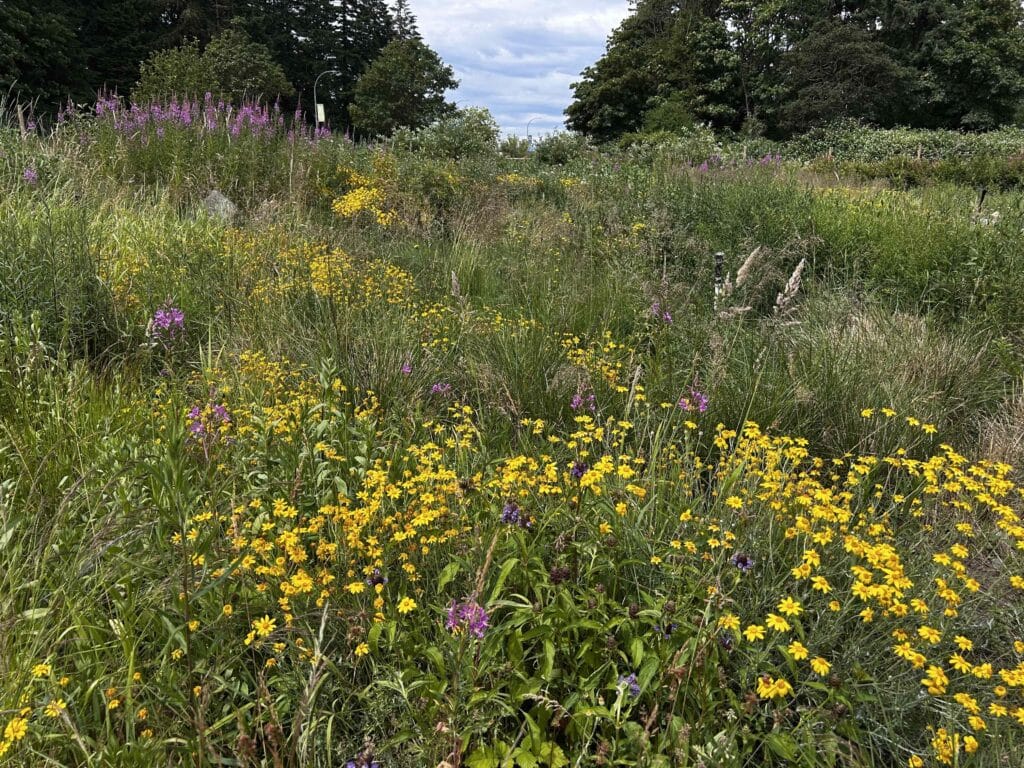
Next time you are heading towards the airport by car, bike, or foot, take a few minutes to tour the magical YYJ Pollinator Garden on the Victoria Airport Authority (VAA) lands on Willingdon Road (see pin on Google Maps), just past the main entrance to YYJ from the Patricia Bay highway. It is well worth visiting all year round, but especially from April to October when it is chock full of native flowers and buzzing bees. The 1200 m2 community garden was established in 2022, thanks to the commitment of many partners including the W̱SÁNEĆ Leadership Council and over 30 volunteers who planted 2000 plants and sowed 325,000 seeds over the course of several planting parties.
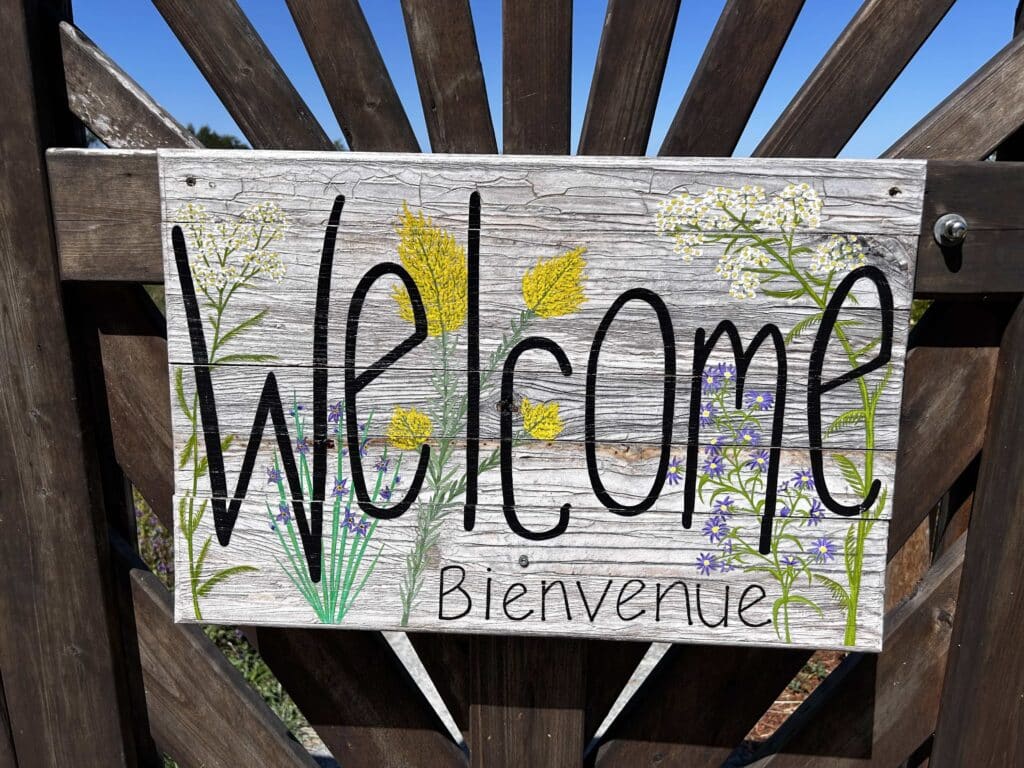
This garden has been a highly educational, inspiring, and challenging project that is free to visit and explore anytime. The garden also showcases the beauty and resiliency of native plants of southern Vancouver Island, and has exquisite interpretative signage by renowned W̱SÍ ̧ḴEM artist Sarah Jim.
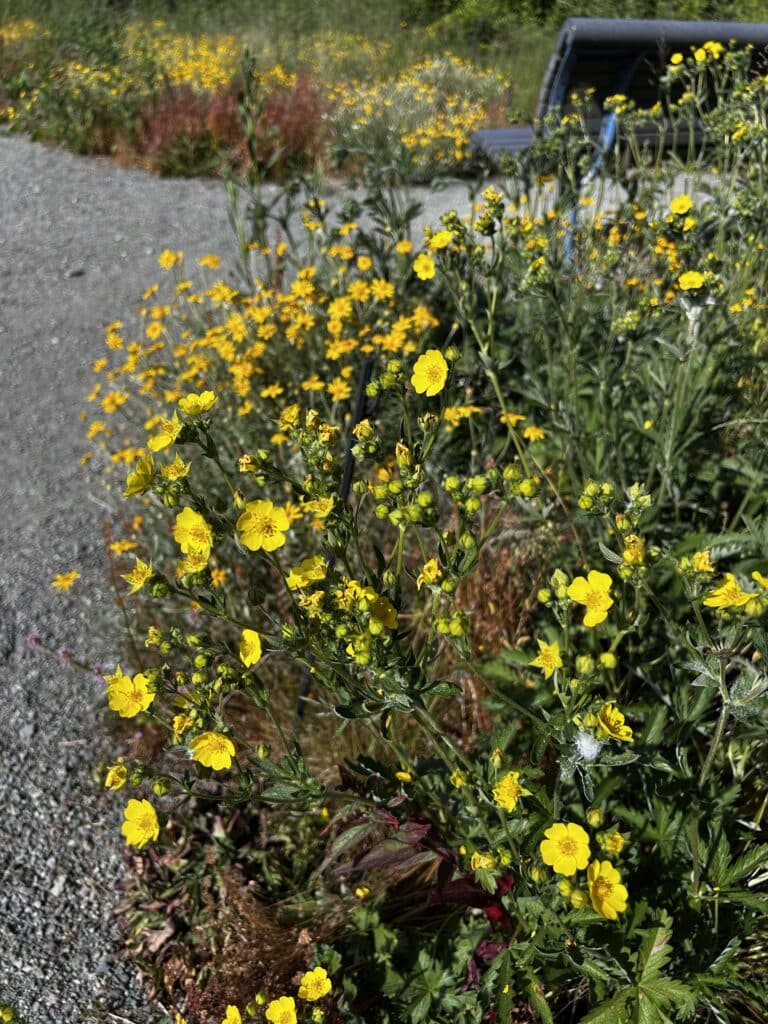
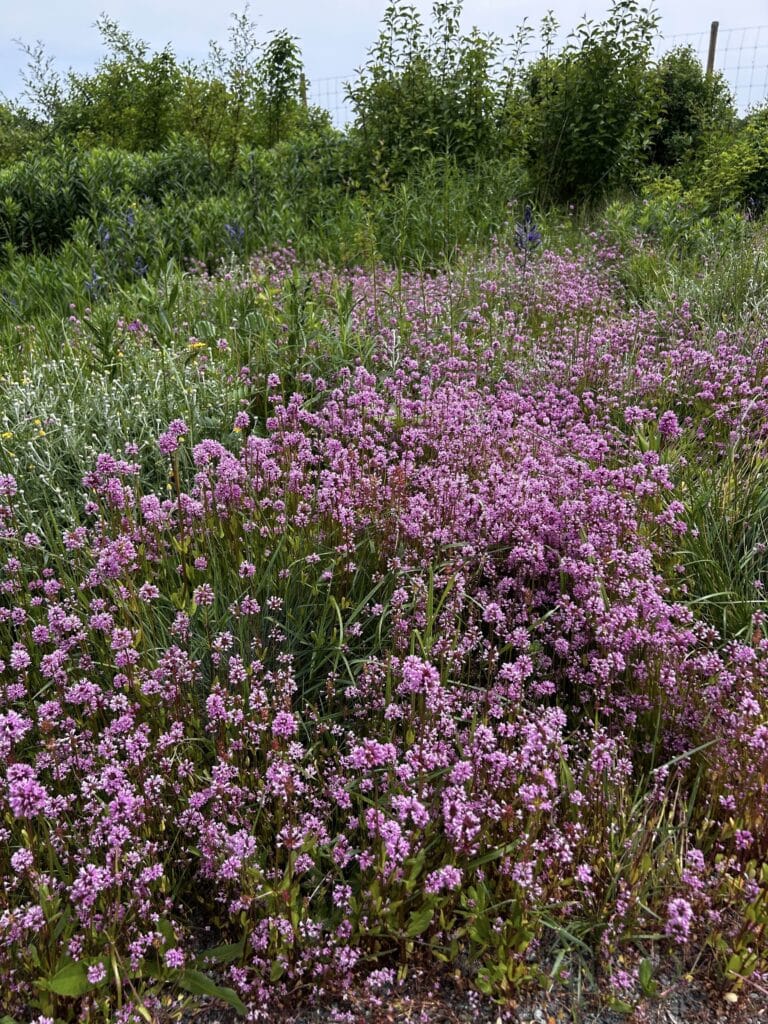
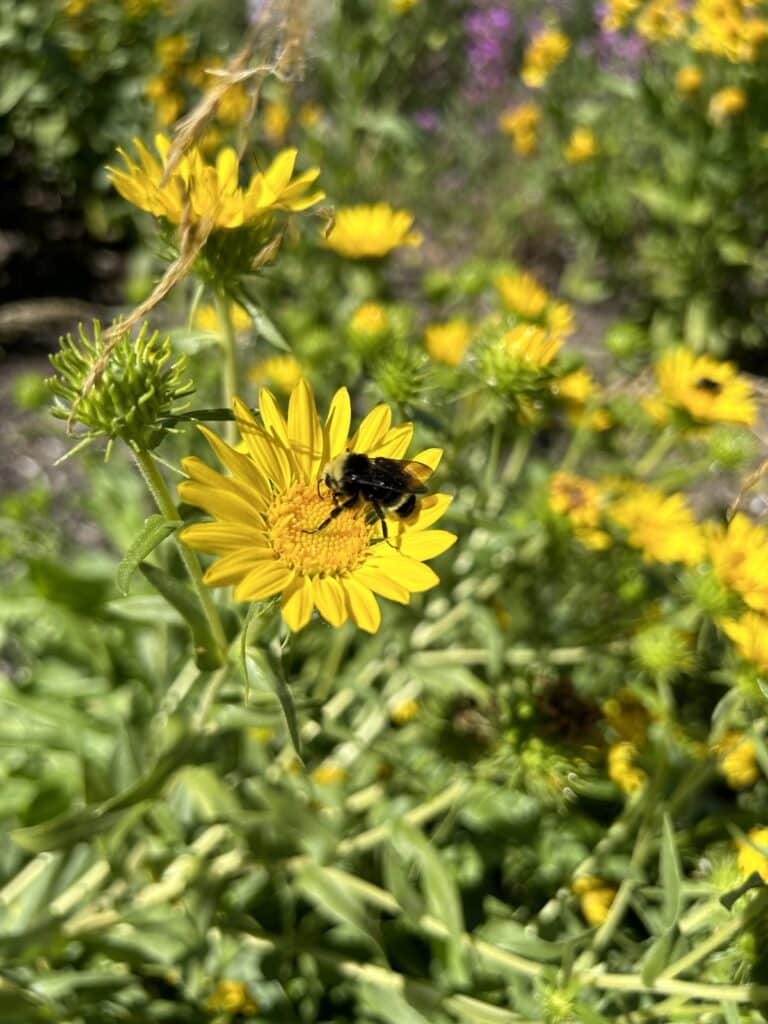

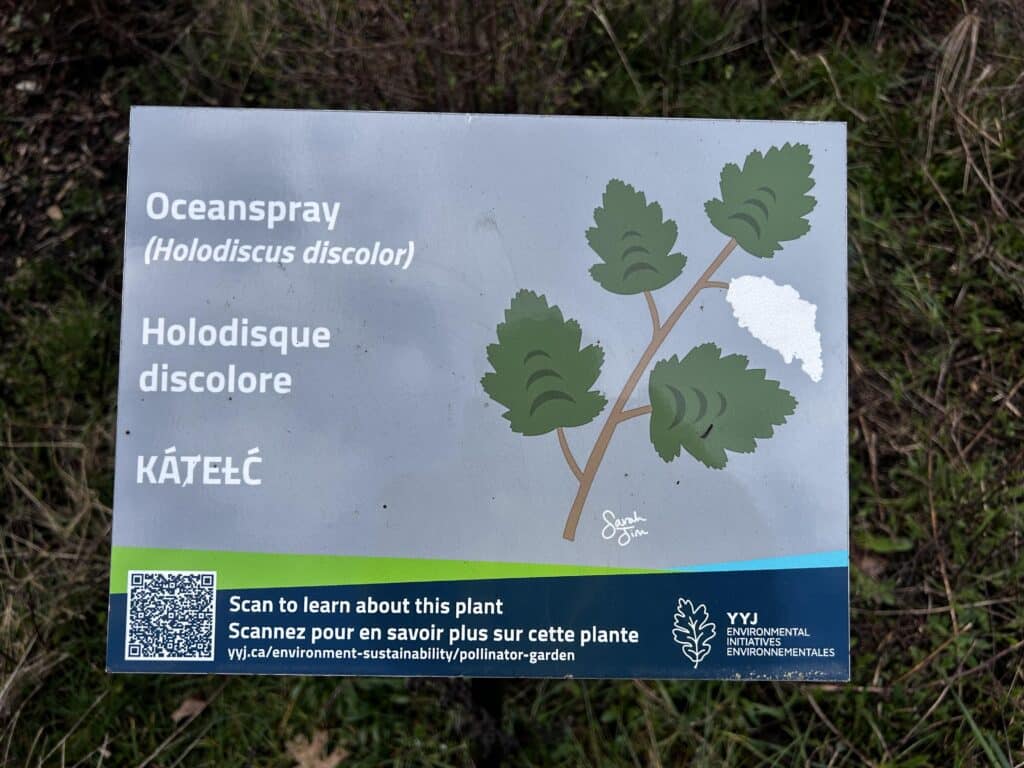
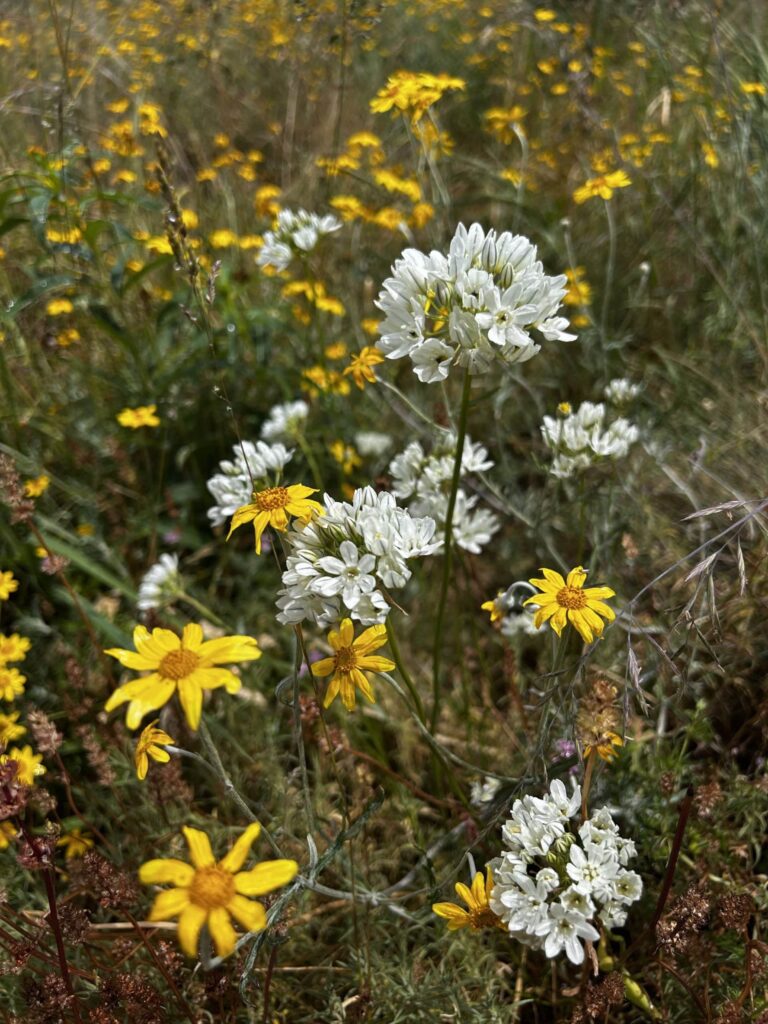
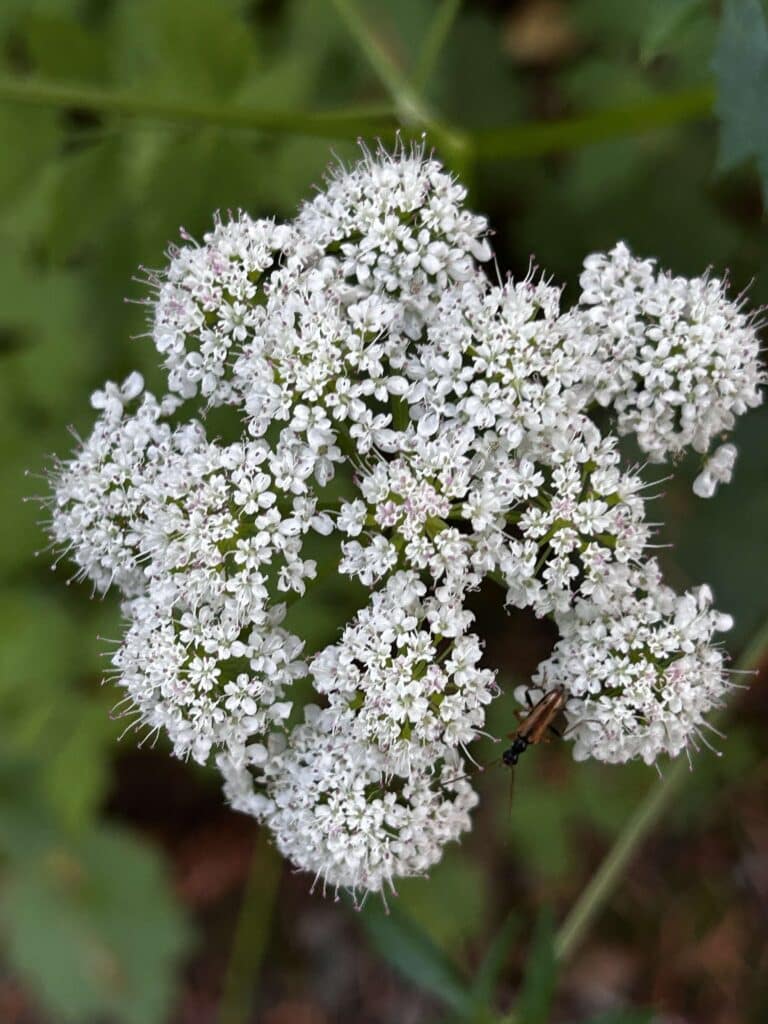
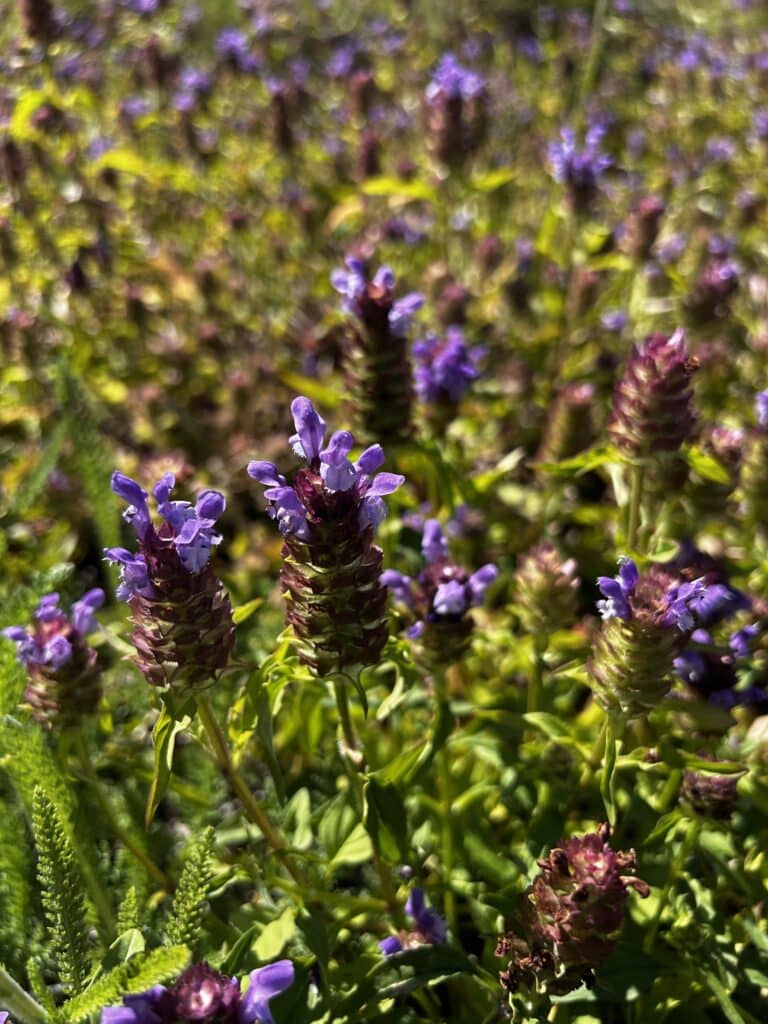
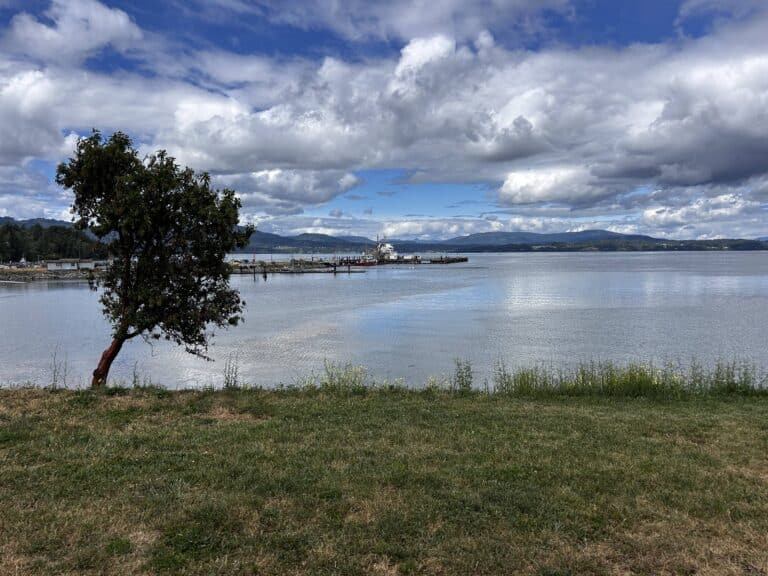
The goal of the pollinator garden has been the restoration of part of the native Garry Oak and camas (ḰȽO,EL) prairie ecosystems of the region called W̱SÍ ̧ḴEM, “Place of Clay“, in North Saanich. Dominique James, a W̱SÁNEĆ woman from a hardworking family of harvesters from W̱SÍ ̧ḴEM (Tseycum) and BOḰEĆEN (Pauquachin), generously shared her deep knowledge of the land and culture before agriculture and industrialization of the 19th century converted the area into a monoculture of non-native grass. ḰȽO,EL (camas) has been at the very heart of the cultural landscape of the W̱SÁNEĆ peoples since time immemorial. She described the one- and four-year cycles that families would follow to oversee the health of these highly productive meadows. Families held precise knowledge to properly time the cultivation and harvesting of the starchy staples, ḰȽO,EL (camas), TSÁLIQUW (chocolate lilies) and other herbaceous plants, as well as the low intensity burns in late fall and early spring that fertilized the meadows for the following growing season. The harvests of these meadows were a currency shared with everyone, and were baked and steamed in beachside cooking pits alongside game meat, shellfish, and fish. As Saltwater People, families moved seasonally, from winter villages on the peninsula to the Gulf and San Juan Islands and areas on the Fraser River (ŚNEWIȽ) in the summer. In terms of the restoration, Joseph reminds us that the lands of W̱SÍ ̧ḴEM are 35 four-year cycles behind schedule, thus complicating the restoration process.
The concept of the YYJ Pollinator Garden arose in 2019-2020 when a few members of staff came up with the idea to reestablish a Garry oak meadow on airport lands. In 2020, The Victoria Airport Authority decided that it wanted to give back to the community and directed resources towards the project. Allison Waldick, geoscientist, was the Environmental Officer at the Victoria Airport Authority who directed the project. According to Waldick, the project moved forward quickly thanks to the generosity of partners who provided essential in-kind resources of time and materials, including IslandEarth Landscape Design, Pendray Farms, Listco Irrigation Peninsula Landscape Supplies, Peninsula Rock Products, Garden City Tree & Landscape, Graphic FX Signworks, as well as, FED Urban Agriculture, who took on the role of project manager. Grants were also received from a partnership between Vancity and Synergy, as well as Polllinator Partnership Canada, and the Stantec Corporate Program. Plants and expertise were sourced from the native plant nursery, Satinflower Nurseries, located in Central Saanich and Metchosin. Several work parties and two planting events later, the garden was officially opened to the public in 2022. In 2023, the Victoria Airport Authority won an Airports Council International Environmental Achievement Award for the YYJ Pollinator Garden. As per a VAA press release, “The panel of judges appreciated VAA’s level of energy and commitment to seeing the YYJ Pollinator Garden to completion and particularly noted and complimented VAA’s outreach and cooperation with the local members of the W̱SÁNEĆ First Nations.”
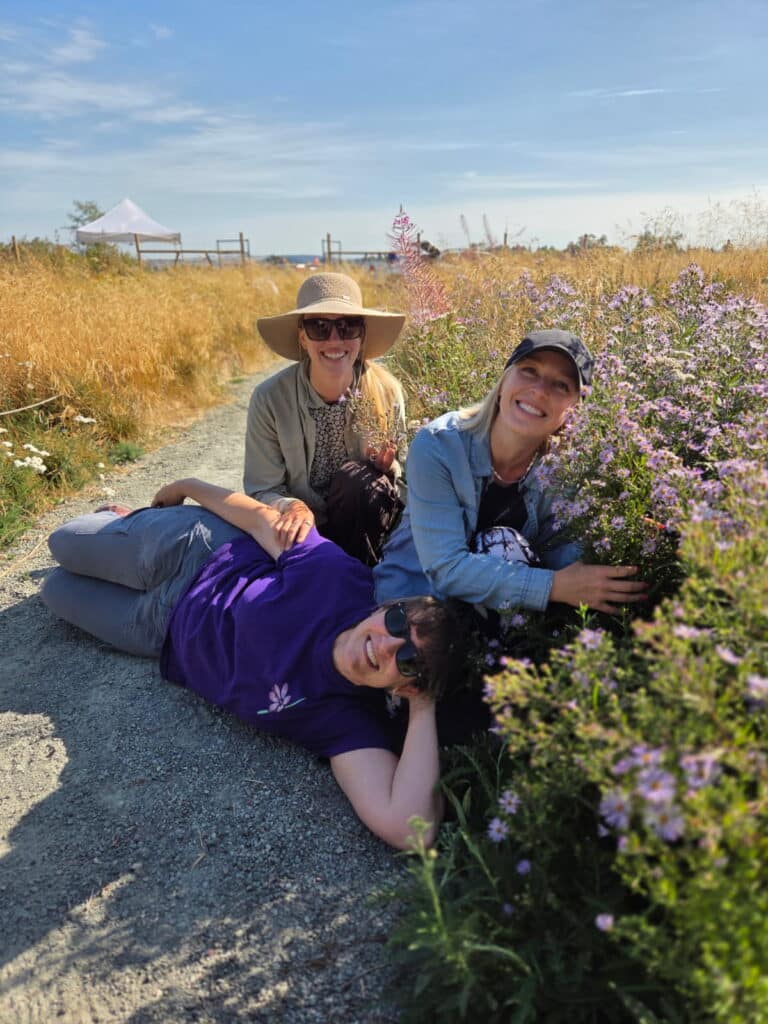 Early days of the project – volunteers
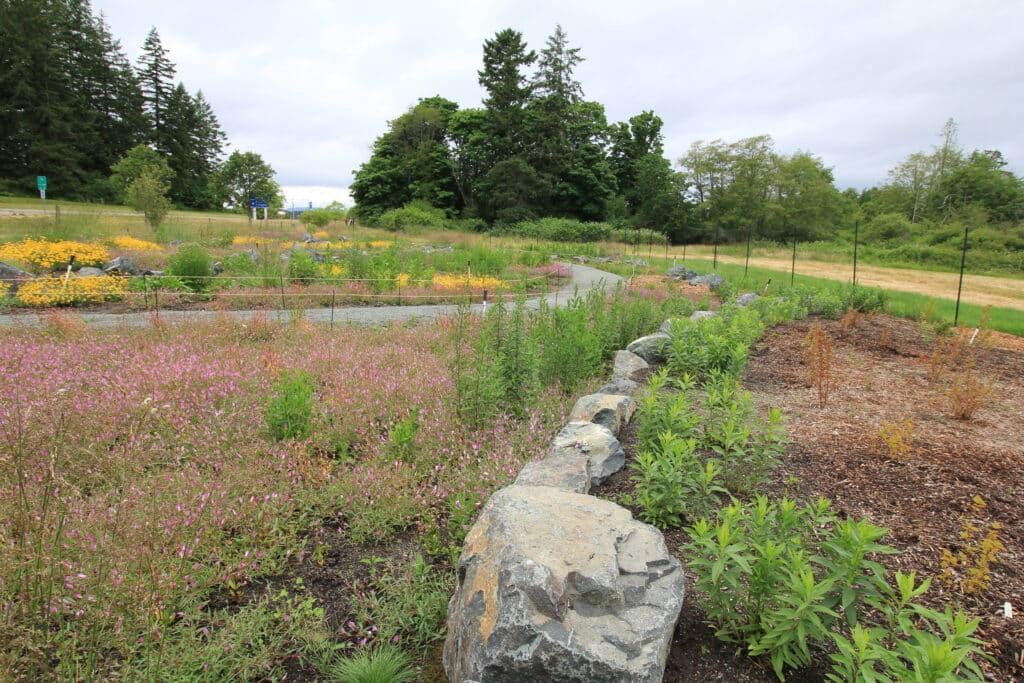 Early days of the project – first season of plants
The project has since inspired other organizations in the community and farther afield to choose native plant habitat, including the Shaw Salish Sea Centre in Sidney with their latest exhibit entitled Wild Allies: Native Plants & Pollinators, which is accompanied by a beautiful display of native plants outside the building. This exhibit also features the stunning graphic art of Sarah Jim. The Saskatoon Airport (YXE) was also motivated by the YYJ Pollinator Garden, and in 2025, they opened their own YXE Pollinator Garden. The new NAV CANADA control tower under construction at YYJ will also be surrounded by native plant-based landscaping of Garry oak meadows.
Would you like to help with restoration of native ecosystems? An ecosystem is one of balance, and it is going to take time for that equilibrium to be established. At present, the garden is still surrounded by a sea of non-native grasses, particularly invasive orchard grass that needs to be removed quickly after germinating in the garden. Because the garden is still very new and lacks its full suite of ecological checks and balances, some native plants grow more vigourously than others and threaten to take over; one example has been tufted hairgrass (Deschampsia cespitosa), which tried to outgrow its neighbours and required a bit of a haircut and mulching. Native ecosystems therefore require consistent attention to keep invasives at bay. One great way to help is to volunteer for Habitat Acquisition Trust (HAT), which has very frequent callouts for volunteers around the peninsula, including the W̱SÍ ̧ḴEM Ivy Project at Tseycum in North Saanich, led by W̱SÍ ̧ḴEM artist Sarah Jim.
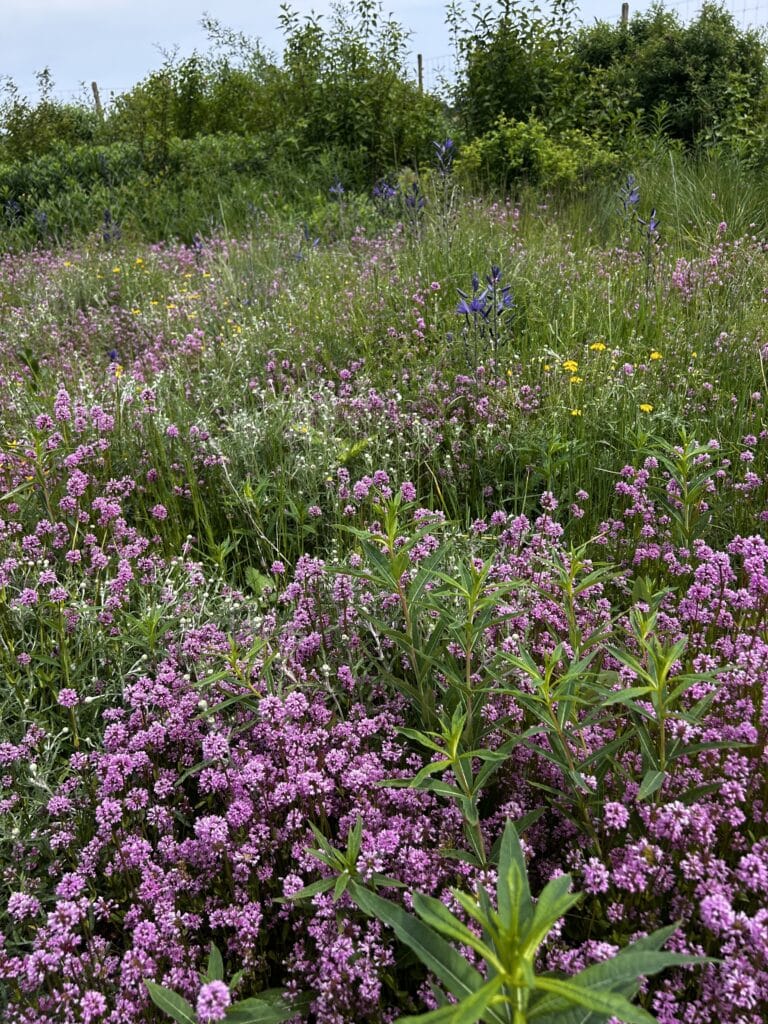
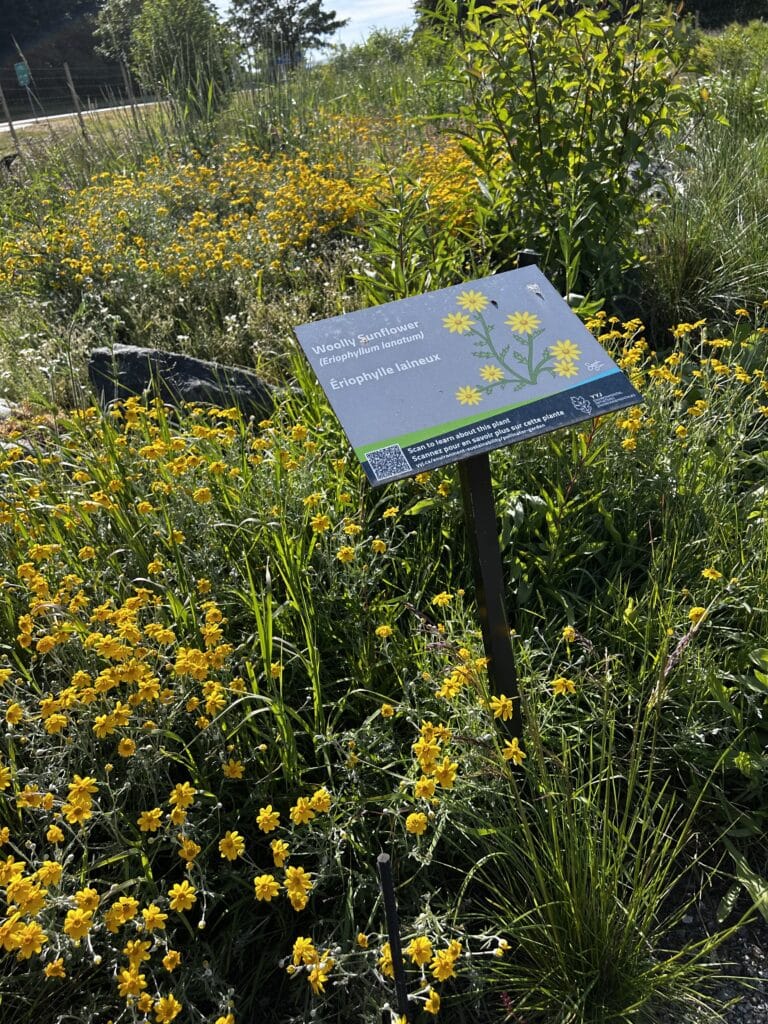
Native plants, like people, thrive with their companions, friends, and mutuals, and thus a key part of the success of the garden has been the careful planning and integration of ecologically vital plant communities within the garden. For instance, when you visit the garden in the early summer, you will see the woolly sunflower with its companion plants of yarrow (ṮELIḰEȽP), sea blush, field chickweed, and Roemer’s fescue, as you would in a Garry Oak meadow in Gowland Tod Park, Horth Hill, ȽÁU,WELṈEW̱ (Dean Park) or the Sooke Hills. In the wetter area of the pollinator garden (towards the back), brilliant yellow goldenrod flowers in July-August alongside brilliant pink Douglas spirea (DIȾEȽIȽĆ) and tufted hairgrass. These native plants, together, provide essential food and habitat for southern Vancouver Island’s birds, insects, and mammals, and have an important cultural significance for the W̱SÁNEĆ peoples. Please visit, take a seat on the bench, and feel the calm energy and strength of this special place.
“Our people lived as part of everything. We were so much a part of nature, we were just like the birds, the animals, the fish. We were like the mountains. Our people lived that way. We knew there was an intelligence, a strength, a power, far beyond ourselves. We knew that everything here didn’t just happen by accident. We believed there was a reason for it being here. There was a force, a strength, a power somewhere that was responsible for it. That is the way our people lived. They lived according to that belief, according to that knowledge. The universe lies before you…”
Dave Elliott Sr. (Saltwater People, link here)
_________________________________________________
Background information and Acknowledgements
Thank you to the following people who donated their time and expertise to helping me better understand the history and motivations of this important project: Dominique Joseph, Kristen Miskelly, Larissa Bron, Michelle Schlafen-Brown, Allison Waldick.
Full list of plants in the garden (YYJ Pollinator Garden PDF brochure)
List of native plants in SENĆOŦEN (as well as pronunciation)
Link to learn more about W̱SÁNEĆ place names, Saltwater Peoples as told by Dave Elliott Sr.
Partners who supported the YYJ Pollinator Garden:
Partnership between Vancity and Synergy
FED Urban Agriculture
Listco Irrigation