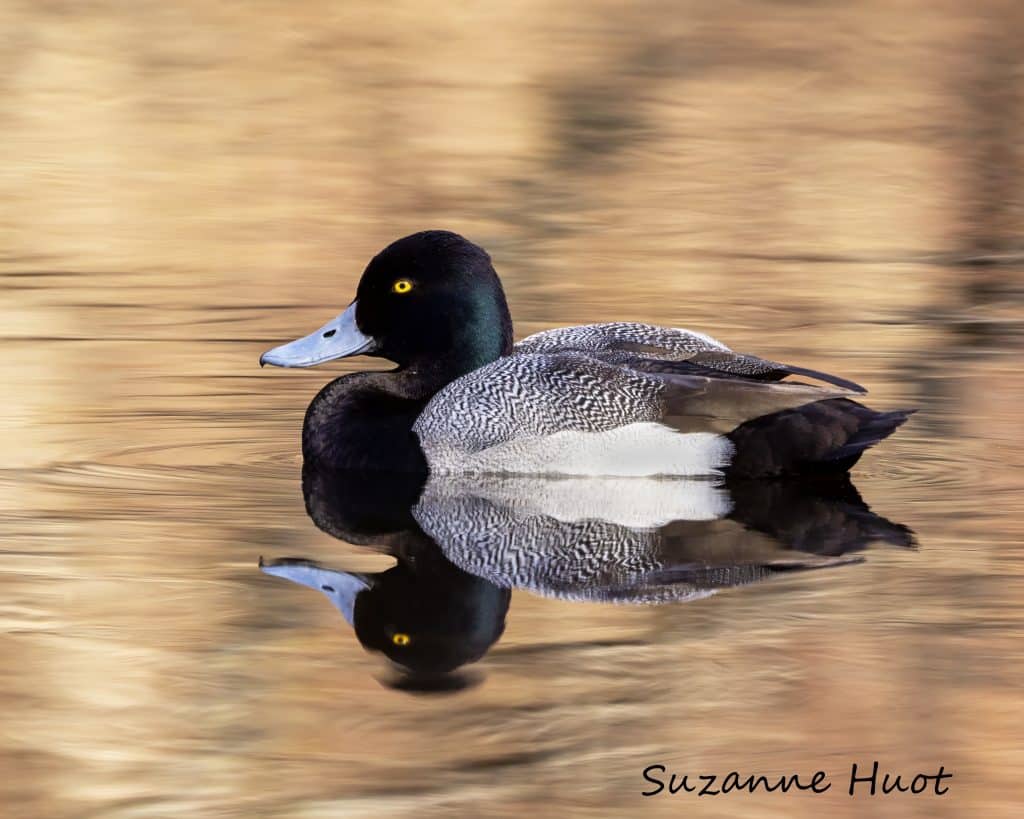
Overwintering Ducks in the Peninsula: A Photo Essay
by Suzanne Hout
Preface from editors: Suzanne Huot is an internationally regarded Canadian wildlife photographer from North Saanich. A previous member of the Photographic Society of America, she has won recognition in several international exhibitions. Today she is a member of CAPA, the Victoria Camera Club, and the Sidney Camera Club. Suzanne has traveled extensively in India, Kenya and Tanzania. More recently she has photographed wildlife in Costa Rica and Ecuador and has published four books to record birds and animals of those countries. When she is not exploring, Suzanne can be found on most days photographing wildlife around Vancouver Island. We are so grateful that she is allowing North Saanich Currents to share 12 stunning images.
__________________
In North Saanich, on the beautiful Saanich peninsula, we are fortunate to be surrounded by nature. Bird watching is a satisfying way to enjoy it to the fullest.
In the fall many species of ducks find their food sources diminish. Cooler weather and icy storms approach announcing an annual migration south.
Vancouver Island is one of the best places for avian migrants to spend the winter as food can be readily found in ponds and near ocean shores.
Migrant ducks usually begin to arrive in early November and remain until late March. In early April they begin the migration north to their breeding grounds once more.
Bird watching is one of the most popular outdoor activities worldwide. All you need is warm gear, a pair of binoculars, a camera or IPhone and these beautiful migrants can be captured in pixels for future memories.
If you find yourself getting hooked on this healthy pastime
investing in a good bird book or iPhone app would be very useful.
Nearby are many places where you can spot different species of ducks. Shoal Harbor is a bird sanctuary and Robert’s Bay is another. Sidney water front is always a good place and if you are lucky you will spot the two resident eagles often seen sitting on the eagle pole. Further afield, Esquimault Lagoon is a great place to walk and search for the many species that winter there. If you want to see handsome wooducks try Kings Pond near Cedar Hill where a dozen or so usually live year round.
I hope you get as much pleasure watching these ducks as I do photographing them.
Descriptions of each duck:
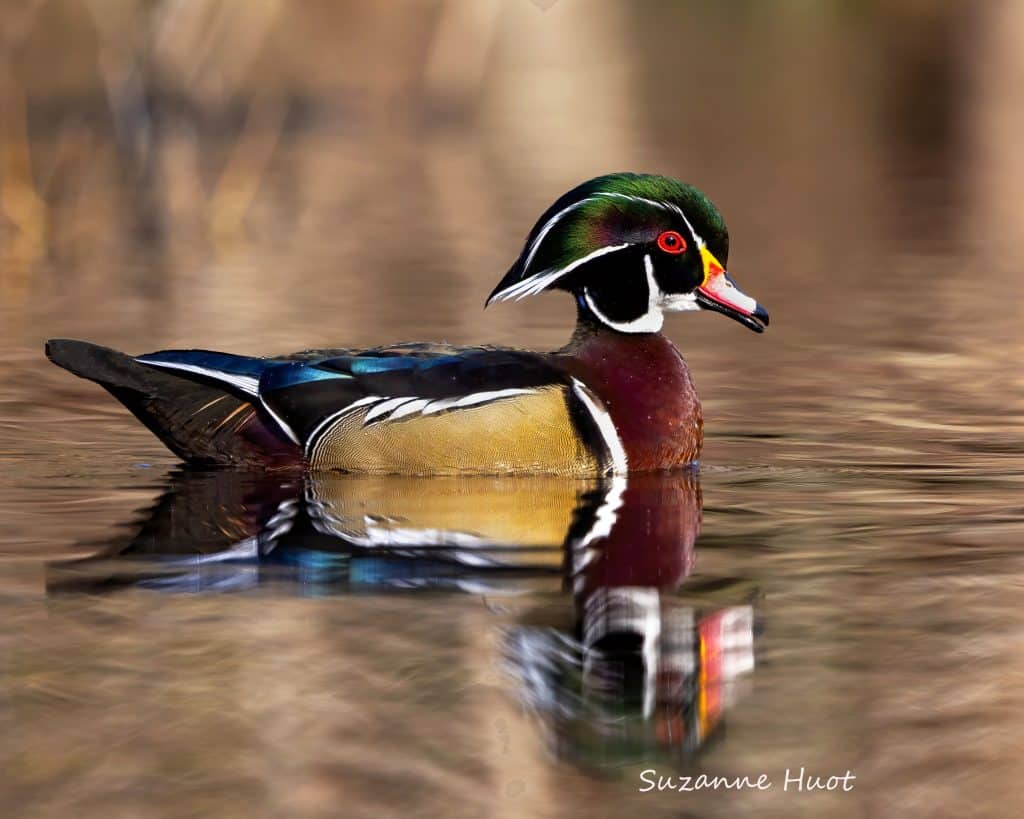
Wood Duck. This beautiful duck can be found year round on several local ponds on the Saanich Peninsula. Wood ducks get their name from their habit of nesting in cavities of trees near ponds and lakes where they lay their eggs. The day after the eggs have hatched the female wood duck flies to the ground to ensure it is safe for her ducklings to exit the cavity. The female then softly calls and the little ducklings jump out of the tree to join their mother and hastily head for water and food in the nearby pond.
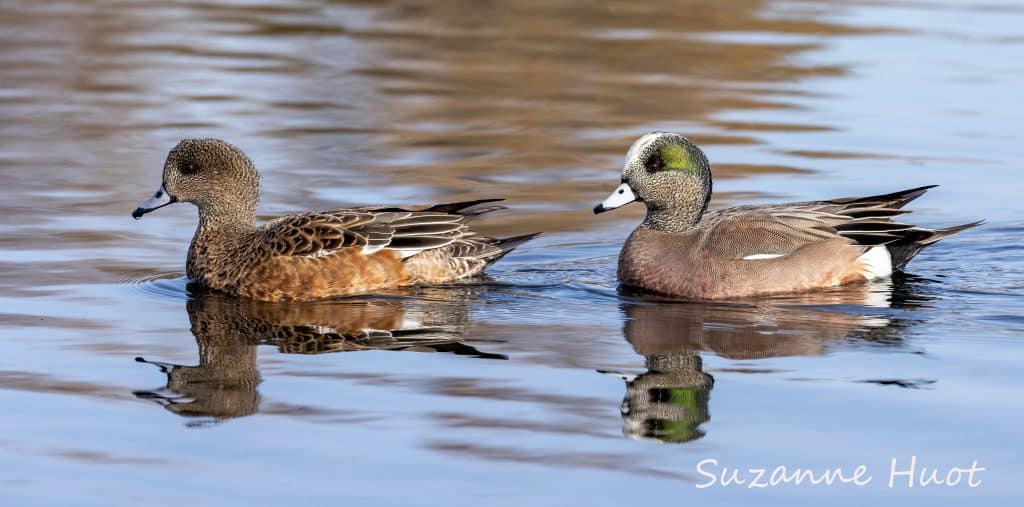
American Wigeons are a migratory species of duck that fly North to the sub-Arctic to breed and rear their chicks. Wigeons arrive on the Saanich Peninsula in early November where they spend the winter months feeding on grass and vegetation such as Eel grass found in shallow water. Like most duck species the male (drake ) and the female (hen) are sexually dimorphic as in most of the wild species of ducks . Males, sporting bright and often iridescent plumage, attract the females e.g the green heads of the Mallard. This characteristic helps differentiate males from females which are often quite a dowdy brownish bird.
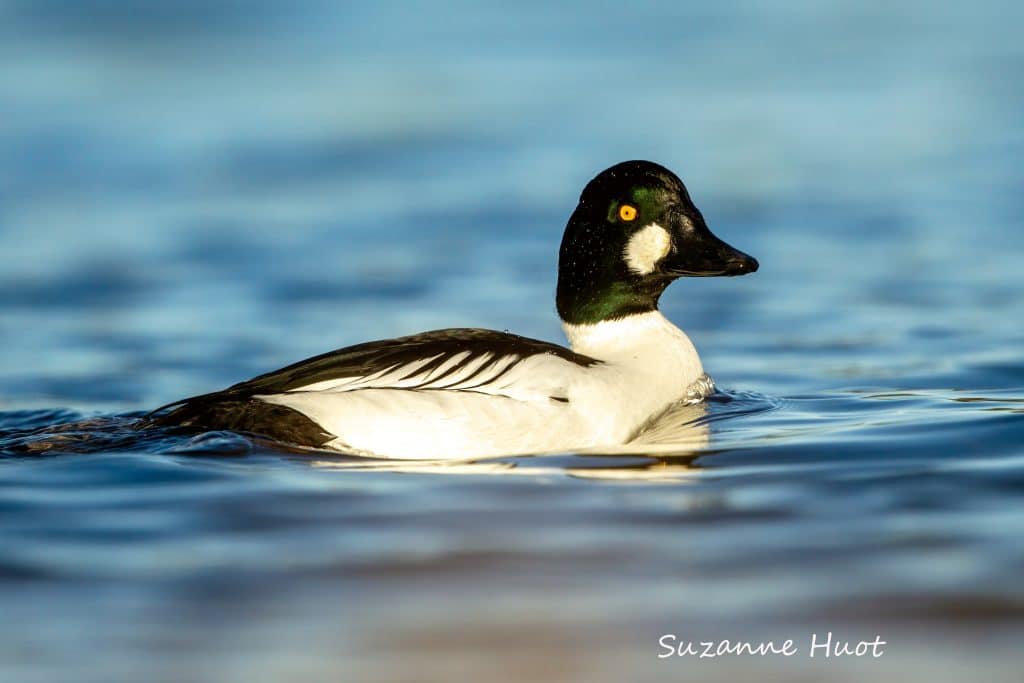
Goldeneyes are medium sized sea ducks with large heads, large golden coloured eyes and a distinctive black and white plumage. They like foraging in shallow waters for small crabs, small crustaceans and small fish. Goldeneyes return to the boreal forest when it is time to breed and rear their chicks. They nest in tree cavities and are often in competition with other ducks, such as wood ducks ,when searching for the perfect nesting cavity.
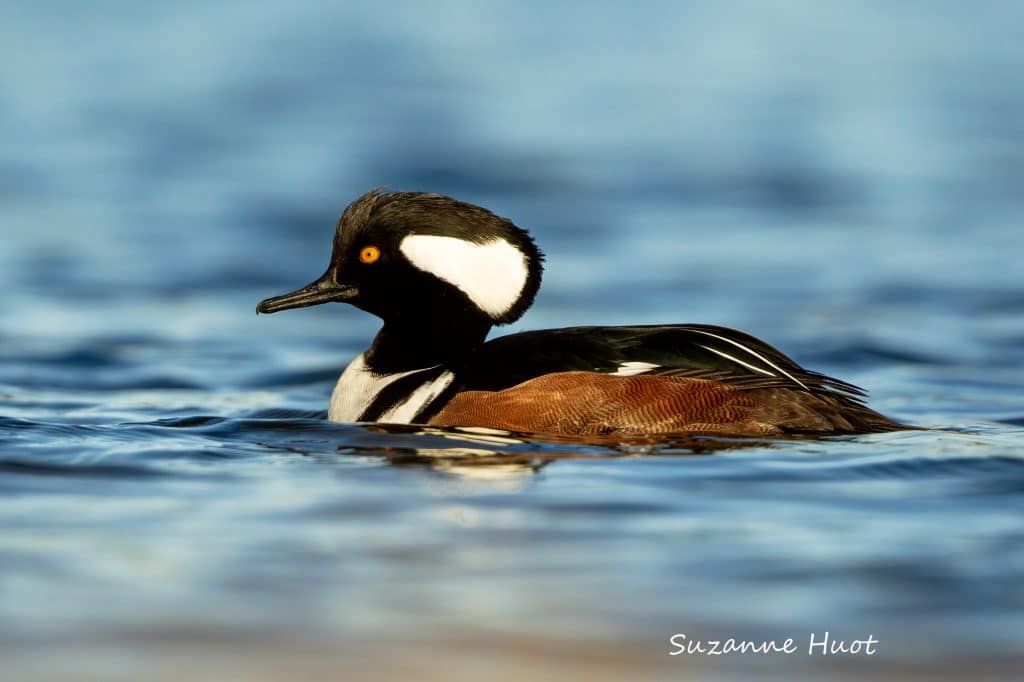
Hooded mergansers are a fish eating species of duck with serrated beaks enabling them to grasp a slippery fish. These males are easy to spot with their spectacular black and white hooded heads while females are mostly brownish with a rufous colored hood, Hooded mergansers are the smallest of the merganser species. and yet another species which nests in tree cavities.
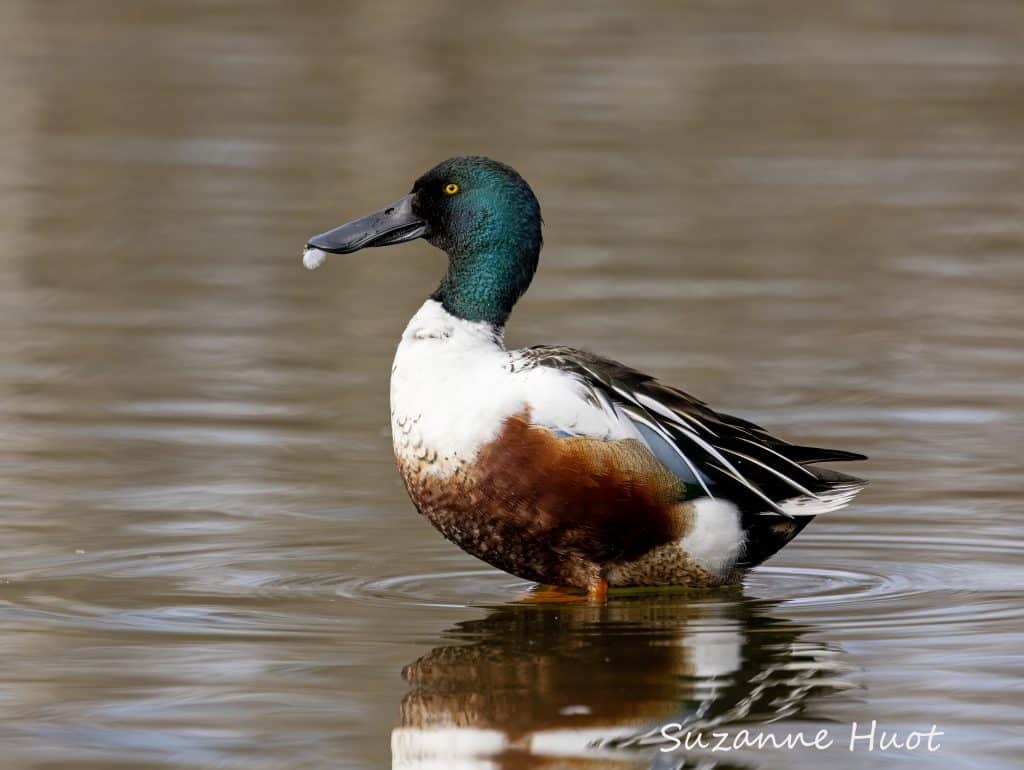
Male Northern shovelers are striking looking birds easy to spot with their distinctive rufous, white plumage and iridescent green heads. Both male and female come with large spoon shaped bills that are about two and a half inches long. Shovelers can be seen foraging with heads down in shallow wetlands and ponds filtering out small crustaceans and seeds from their bills. They are another winter visitor to the peninsula.
Common mergansers are very handsome. They are a large fish eating duck with a gleaming white body, dark iridescent head and a striking red beak.
Females have a rusty brown head and a greyish body. Common mergansers are often found traveling and fishing in flocks and are also tree cavity nesters.

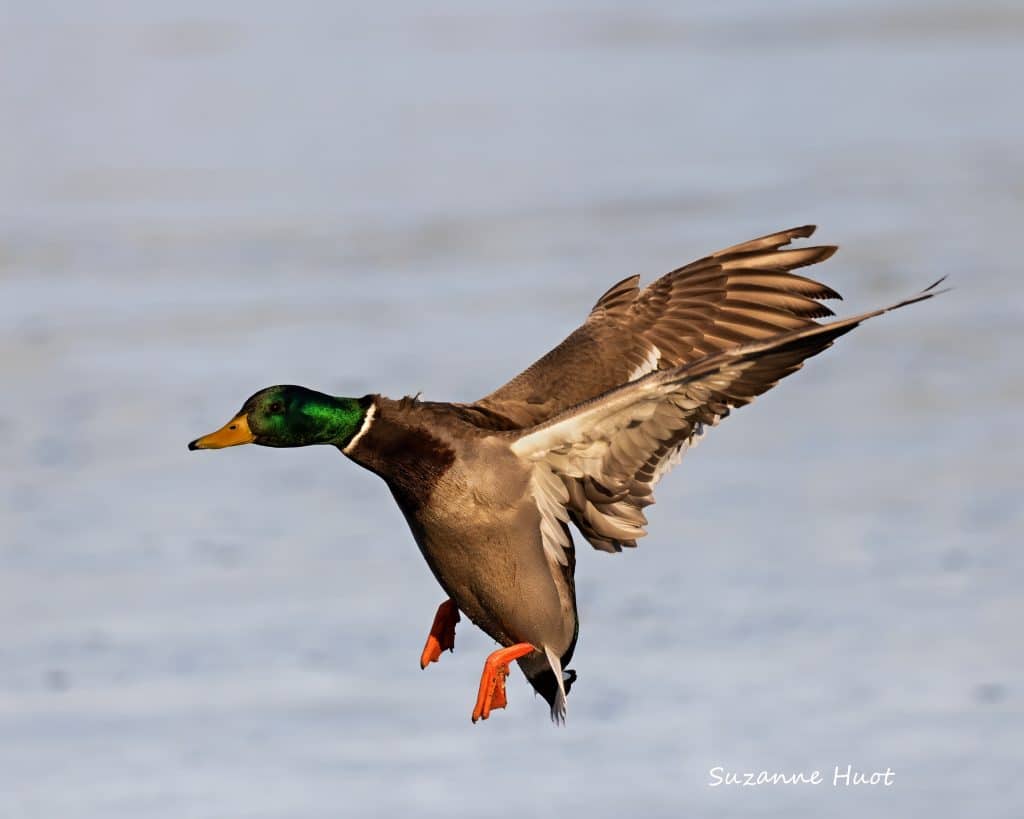
Mallards are our most common duck found year round on most local ponds on the Saanich Peninsula. They forage on the water surface or dunk under in search of insects, fish and small invertebrates. The handsome drake is hard to miss with his iridescent green head. Mallards are also one of the most vocal of the duck family always chattering and arguing amongst themselves. Hen Mallards are plain brown birds but pretty in their own way. Mallards like to nest close to ponds hidden in abundant vegetation.
The Northern Pintail is a very elegant extended neck duck with a long pointed tail which gives this handsome duck its name. Pintails are opportunistic feeders with a diet that is heavily reliant on 80% plant matter during the winter. In the spring breeding season their diet changes to invertebrates found in muddy fields. An interesting fact about Pintail ducks is that during their migration flights, which occur at night, they can reach speeds 77 kph.

Buffleheads are small sea ducks found bobbing on the ocean surface and diving in search of food which mainly comprise of small crustaceans and fish.
The name bufflehead comes from the buffle shaped head of the male. It has distinctive iridescent blue green plumage with white patches. In the spring these little ducks migrate north to aspen forests or poplar trees in search of holes and cavities which woodpeckers had previously made to nest and lay their eggs. The little ducklings have to make a leap of faith leaving their nest by jumping from high up in the trees. Newly hatched Bufflehead chicks weigh between 35 and 45 grams and are so light they usually touch down unharmed.
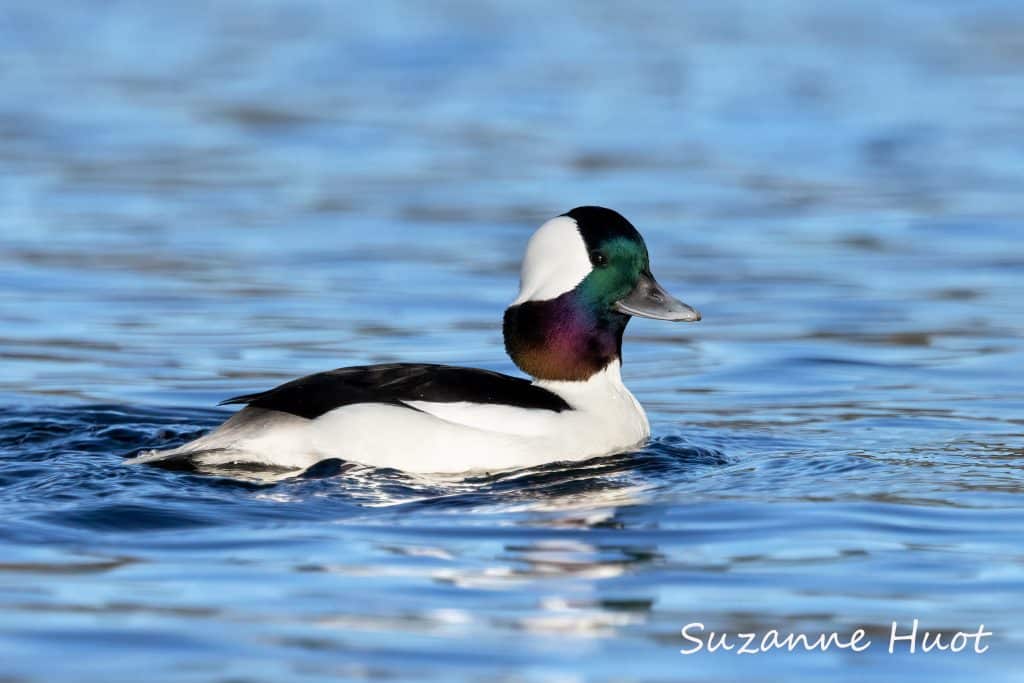
Harlequin ducks are beautiful small sea ducks named for their harlequin looking plumage. In the winter months they stay near the rocky shores of the coast here on the Peninsula. At the end of the breeding season one can find them hanging out in flocks on offshore islands.
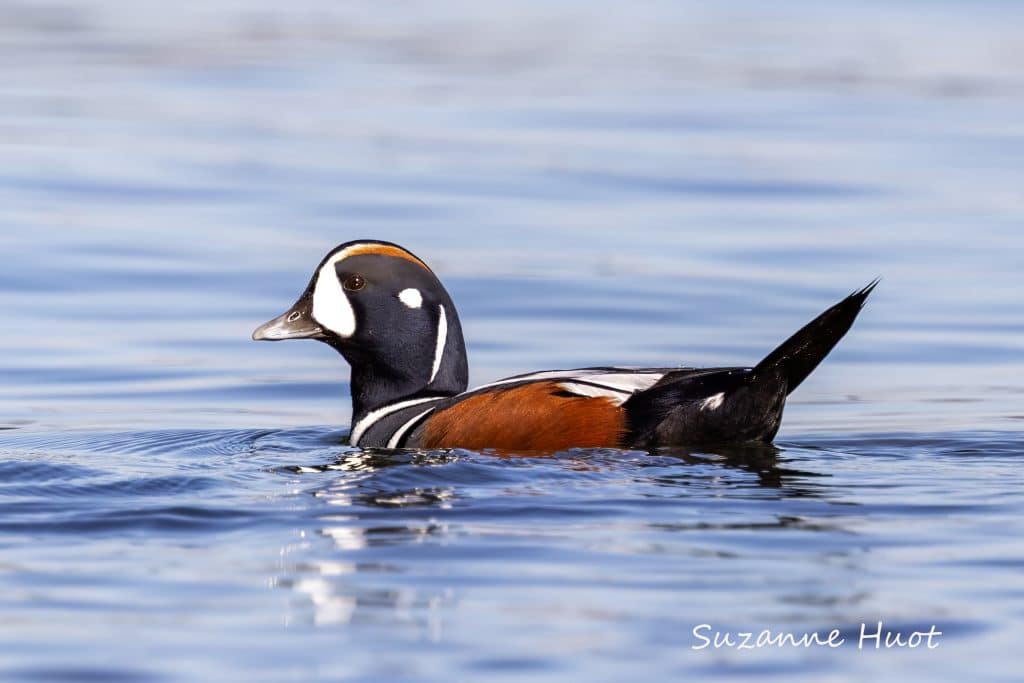
Ring-necked ducks are medium sized diving birds found mostly on freshwater lakes and ponds. The drake can be identified by the white ring around its beak. During the breeding season the drake shows a rusty colored ring around its neck. These little ducks are omnivorous, diving for seeds leeches and submerged plants as well as snails and other animal matter.
They breed around wooded lakes and ponds.