Remembering Sheila Bailin (May 8, 1954-September 14, 2026)
by Meenal Shrivastava
North Saanich Currents has lost one of our founding co-editors and I have lost a dear friend who was always there for wise counsel with unreserved warmth for the past two decades. Sheila raised three wonderfully bright and talented children – Michael, Ariana, and David – who loved and admired her tremendously and share their mother’s commitment to justice and joyfulness. Sheila’s life story speaks to the significant contribution of women in the multifaceted history of our communities, which often goes unrecorded. This commemoration of Sheila Bailin’s inspiring life is a collaboration with her children’s voices and her own words.
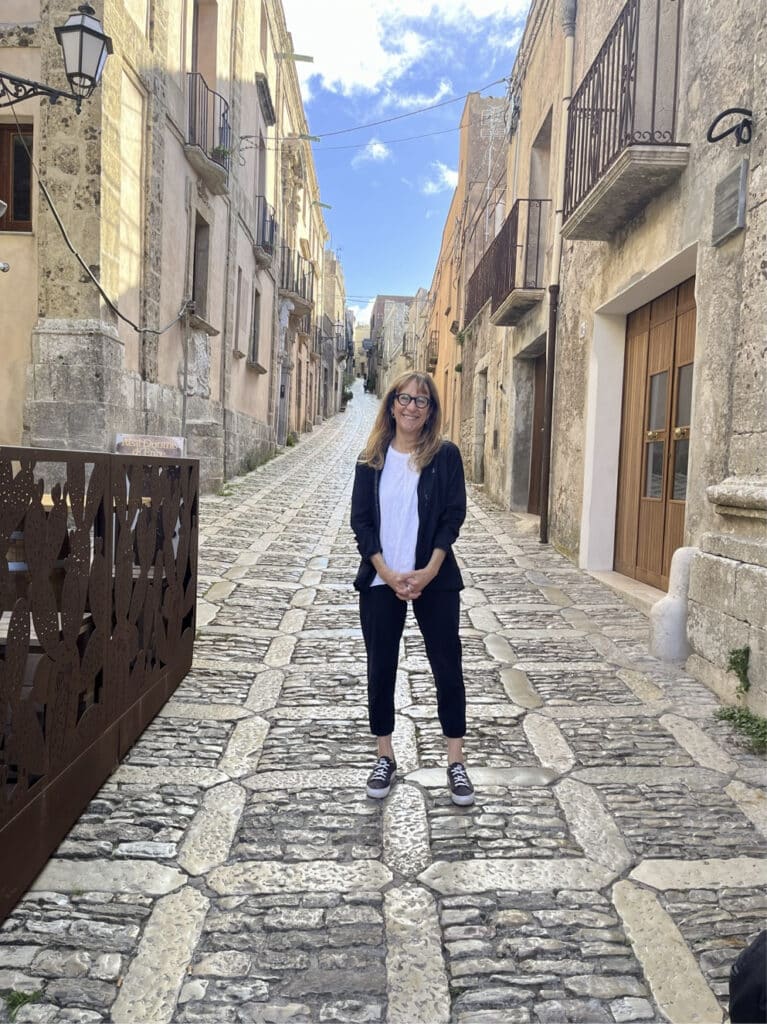
Sheila had a superpower – subtle persuasiveness – which she used with strategic thinking to create deep relationships. She was quietly influential, working behind the scenes for inclusive systemic change throughout her life. Her superpower gave her an uncanny ability to collaborate across ideological divides on sensitive issues. Her leadership was thoughtful, authentic, and deeply empathetic, often without being visible.
Sheila believed that determined individuals can come together, even across differences, to fight passionately for shared goals to effect meaningful change. She was organizing around her kitchen table – writing petitions, making phone calls, letters to the editor, and much more – long before the presence of technological tools of social organizing (and disorganizing).
Sheila’s parents’ activism was influential in developing her own. Her parents, Dee and Eugene Bailin, moved from California to North Saanich in the 1960s in opposition to the US involvement in the Vietnam War. They were engaged members of the community and both of them served as North Saanich councillors. She remembers her dad, who had just had a heart attack, going to a council meeting in an ambulance to cast his vote on a critical environmental issue.
Sheila took up the mantle from her parents of questioning status quo and archaic social norms, challenging racist practices and institutionalized injustice within universities, political structures, and the health systems.
Sheila lived briefly in Germany, before returning to North Saanich as a young adult where she worked as a bouncer while attending school.
After completing her undergraduate degree in sociology, Sheila moved to Edmonton to pursue social work while raising her three children. During that time, Sheila also became a passionate advocate for women’s health, reproductive choice, education, and Jewish and interfaith issues.
After Dee’s passing in 2015, Sheila moved back to her densely forested family home protected under a Conservation Covenant. During the intervening 40 years, she had remained connected to North Saanich as a frequent visitor. Before long, she was fully re-immersed in the community as a board member of the North Saanich Residents Association and the NS Farmer’s Market. The location had changed, but not her conviction in the power of coalitions to make meaningful change.
A Fearless Advocate for Women
Michael was six months old when Sheila first joined the pro-choice movement in Alberta in the early 80s. She was a founding member of Abortion By Choice (ABC), which eventually became a chapter of the Canadian Abortion Rights Action League (CARAL), a coalition of pro-choice activists formed to protest the incarceration of Dr. Henry Morgentaler who was jailed for providing safe abortions before it was decriminalized in Canada.[1]
Dr. Henry Morgentaler, a survivor of Hitler’s death camps, began performing abortions in 1968 in his private Montreal clinic as a matter of conscience, to help save women’s lives. Dr. Morgentaler was repeatedly sued and jailed as he continued to challenge the federal and provincial governments to decriminalize abortion. When he visited Sheila’s home in Edmonton, they had to have security in the neighbourhood.Sheila had a particular knack for managing crisis and conflict. While volunteering on a campaign, when anti-choice protesters were screaming outside, she brought them hot chocolate.
Sheila was soon serving on the boards of Planned Parenthood, the Sexual Assault Centre of Edmonton, and another half a dozen boards and committees. Not satisfied with the slow pace of change in unconnected silos, Sheila recognized the need for effective collaboration and devised a strategy.
Alongside a lawyer friend, Sheila gathered statistics about women having to leave the province to get abortion care. They had to call up phone operators as there was no internet to look up phone numbers of clinics in the US. They found out that somewhere between 1000-2000 Canadian women sought abortions at clinics in the northern states at great personal expense and safety. This was urgent work.
Sheila drew up a list of 50 mainstream organizations that would support their work – church groups, social workers, medical associations, and others. 35 of those organizations joined the coalition within two weeks. The coalition used the stats Sheila collected to go to the media and to convince the provincial government to fund pro-choice clinics in Alberta so women and girls wouldn’t have to go to the hospital for a minimum of three doctors’ signatures.
Consistent nationwide efforts led to the 1988 Supreme Court of Canada decision in R. v. Morgentaler, which decriminalized abortion. Following the decision, Alberta abolished abortion panels in 1988, which only prompted Sheila to vow to continue to lobby for access to abortion in government-funded, community-run clinics.
An extension of her activism around women’s right to choose what is best for their own bodies was her focus on sexual assault. In the 1990s, she initiated sexual assault awareness week in Alberta.
Years later, Sheila’s daughter, Ariana, wrote a brilliant piece about Sheila’s activism for her feminist radio show, where she recounted the danger she faced in advocating for women’s bodily autonomy.
“They were shooting doctors. My mom says she never let the press have pictures of my brothers and I after the age of two. She used to make a lot of media appearances with her babies! Pro-child, Pro-choice. She was four months pregnant with my little brother David in November 1986. At the time, she was a part of ABC and on the board of CARAL. She took me with her as a baby to Ottawa to national meetings. She had me in her arms when she made speeches. The following year, she did the same while breast-feeding David!”
Talking to her mother about her pro-choice work, Ariana said, “That saved a lot of lives.” Sheila said, “I never really thought of that, but it probably did.”
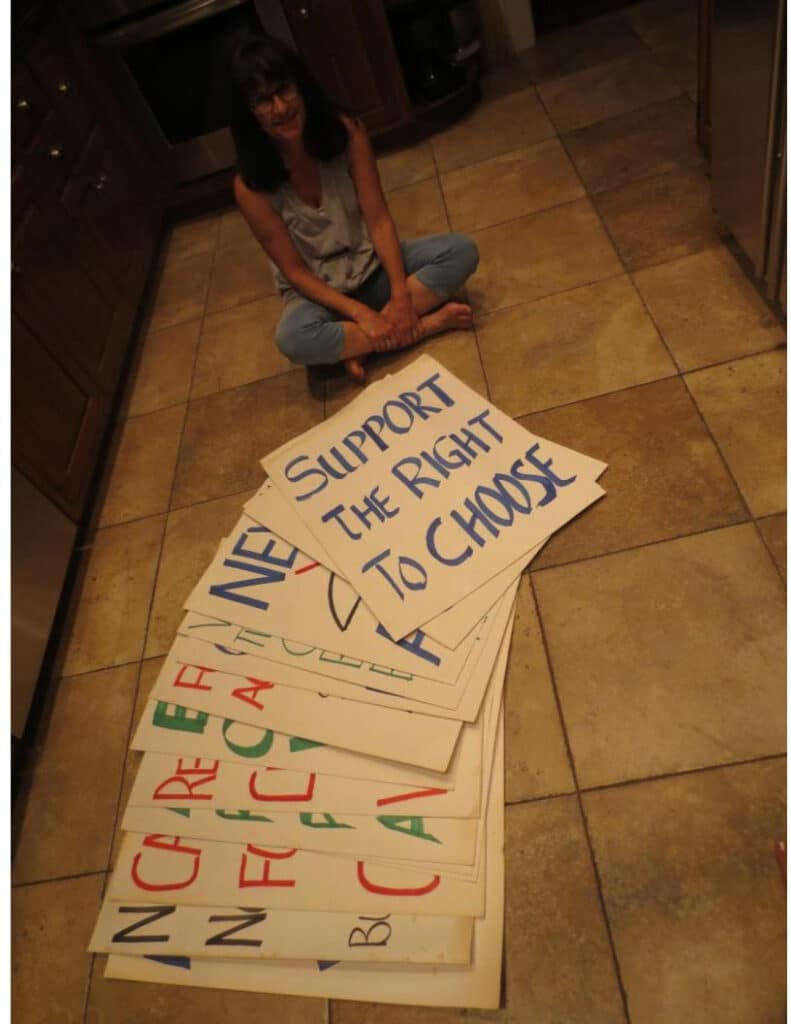
A Woman of Many Causes
Ironically, while Sheila always promoted other women, she preferred to remain unnamed in the numerous projects in which she played a significant role. As a feminist, she also agreed with my frustration at the persistent erasure of women’s contribution in social-political movements around the world.
Now, that she is beyond being embarrassed by praise, I would like to believe that Sheila is smiling indulgently at our effort to name her in some of the endeavours and organizations to which she contributed in varied and significant ways. In addition to her contributions to the movement for reproductive justice in Canada, here are some of her other notable projects.
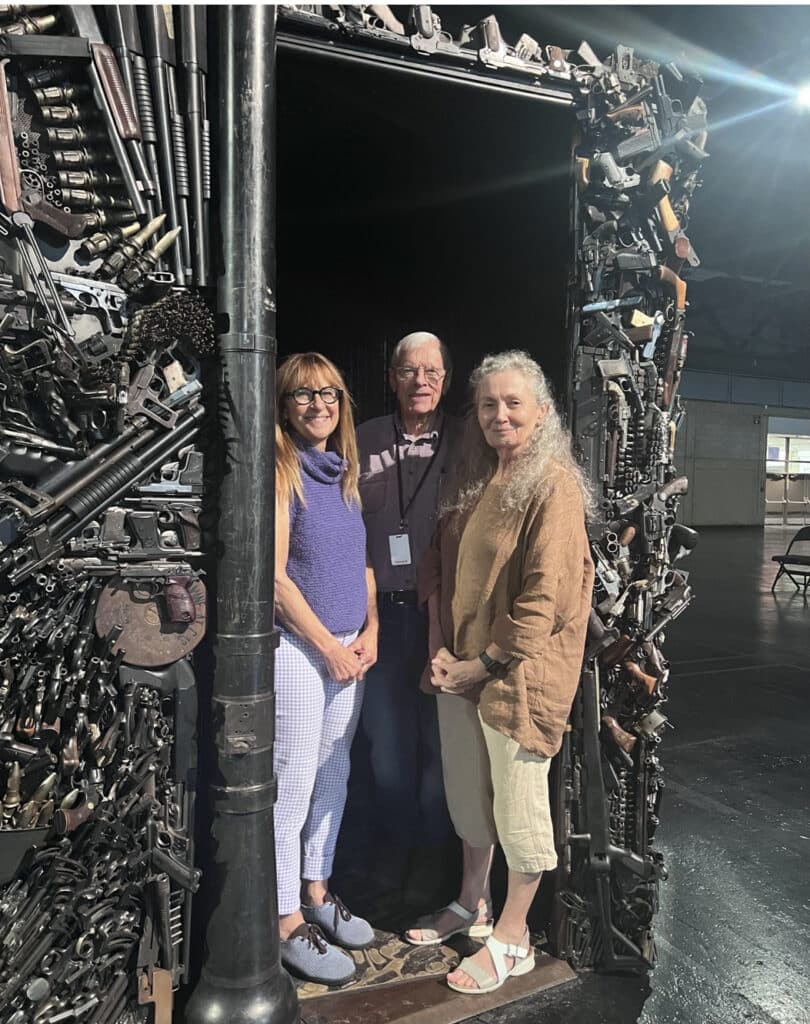
Peacemaking: An avid pacifist, her bumper sticker in the 1980’s read: “You can’t hug children with nuclear arms”. Two decades later, she was heavily involved, contributing hundreds of hours while raising three children, in The Gun Sculpture project, which was co-created by Wallis Kendal and Sandra Bromley. The project involved the creation of a five-ton welded interactive monument to peace made of over 7,000 individual deactivated firearms from war-torn regions around the world. Sheila was instrumental in arranging for the acquisition of deactivated firearms from various organizations globally.
Sheila felt called to bear witness to all kinds of harm, violence, and genocide. She engaged in conversations with people all over the world who had been impacted by violence. The gun sculpture premiered in Edmonton and toured the world extensively for many years. The Art of Peacekeeping , a documentary made in 2002, documents the creation of The Gun Sculpture. The artists and group eventually formed the iHuman Youth Society – an arts-based program for Edmonton’s most marginalized youth – where Sheila served as the Community Liaison & Communications Director.
Inter and Intra Faith Relations: Sheila’s feminism and Judaism were inextricably linked together.

She carved out space for women and girls within a patriarchal religion. Sheila always said that your middle finger was your protest finger.
She worked tirelessly to advance TBO, a small interfaith family friendly progressive synagogue in Alberta, a place supportive of LGBT community, youth, and community building. Sheila was a member of the Arab Jewish Women’s Peace Coalition in Edmonton. She also financially supported work that called for nuanced dialogue and collaboration across difference, grief, and historical and ongoing conflict. She didn’t shy away from issues that were thorny and believed that it was possible for people to come together to support human rights and equality even in the face of seemingly impossible historical and ongoing challenges.
Political Activism: In a province led by conservative government for most of its history, Sheila joined a small group of audacious Albertans who founded the Democratic Renewal Project. They conducted a poll which demonstrated that 48 percent of Albertans would vote for progressive candidates, but that this vote was split among the four progressive political groups. The DRP advocated for the creation of an electoral arrangement or cooperation agreement uniting Liberals, New Democratic Party, Greens, and Independents to prevent vote splitting by progressive voters. While a formal arrangement was rejected by the political leaders in 2009, DRP’s public education campaign for strategic voting very likely contributed to the first ever NDP government elected in Alberta in 2015.
Her love of political activism was instilled from an early age in her children, and she protested with her grandchildren to preserve the rural community and agricultural land in North Saanich.
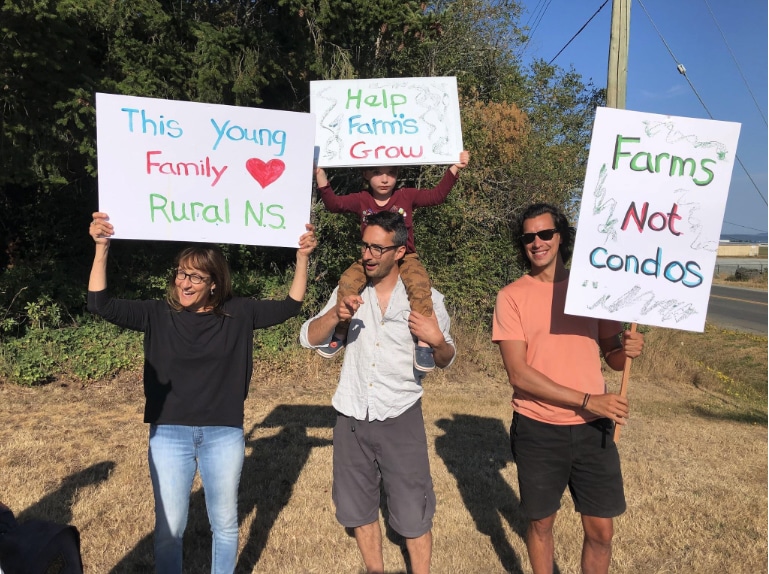
Environmental Action: Sheila was a supporter of environmental organizations in BC and AB. Sheila cared about food security before it was cool. She was way ahead of her time on accessing fair trade, sustainable agriculture, and the importance of organic food. She prioritized ethically sourced foods and embodied the importance of supporting local agriculture and small businesses. She was a big fan of good food available close to home, like at the Fox & Monocle.
She walked the talk at every step, including expanding a protective ecological covenant on her home in North Saanich with the Habitat Acquisition Trust.
Youth and Education: Sheila studied sociology and worked in social work, in particular with youth. As a student, she was invited to create the orientation program at her alma matter. She took courses in her adult life and believed in the power of creativity and wit to invite behavioral growth and change.
She was obsessive about research and as a young mother in the 80s, went to great lengths to research food and nutrition. Sheila sent her pre-K children to the U of A Education Faculty’s Child Study Centre and, in Michael’s words, was ‘ruthlessly’ supportive of her children’s endeavours. Her children remember being sent to the bottom of the stairs to think, talk in over, and hug it out, rather than banished to their bedrooms.
Beyond her family, Sheila supported young people’s growth through progressive education. She helped save a special school (the Bilingual Montessori Learning Centre of Edmonton) attended by her children, which included innovating and enriching a multi-cultural education program. She also leant her support to independent dance and music teachers that were beloved by her children. As a kid, when Ariana accidently brought home a particularly misogynistic book from the public library, she took it up with the staff who had it promptly removed from the shelves.
One of her last bequests was to create the Sheila Bailin North Saanich Current Community Impact Fund at the University of Victoria to add and nurture youth voices in fostering community connections. This annual fund will provide a one-term placement to a student from any disciplines and at any level of study with North Saanich Currents, the community newsletter she co-founded.
Community Building: She loved working with people from diverse cultural backgrounds and instantly inspired trust with her cheeky comments and inclusive humour. Sheila supported her family, friends and neighbours, with her generous spirit, sage counsel, and delectable meals (even for friends with ‘eating disorders’ as outrageous as veganism). Sheila would go out of her way to give positive feedback at every opportunity, for instance, telling managers when employees had gone above and beyond, often calling back to thank someone.
Sheila co-founded North Saanich Currents, a free quarterly community-led newsletter to provide accessible resources to their neighbours while fostering learning, belonging, and appreciation for the unique character and beauty of the peninsula.
Life Beyond Activism
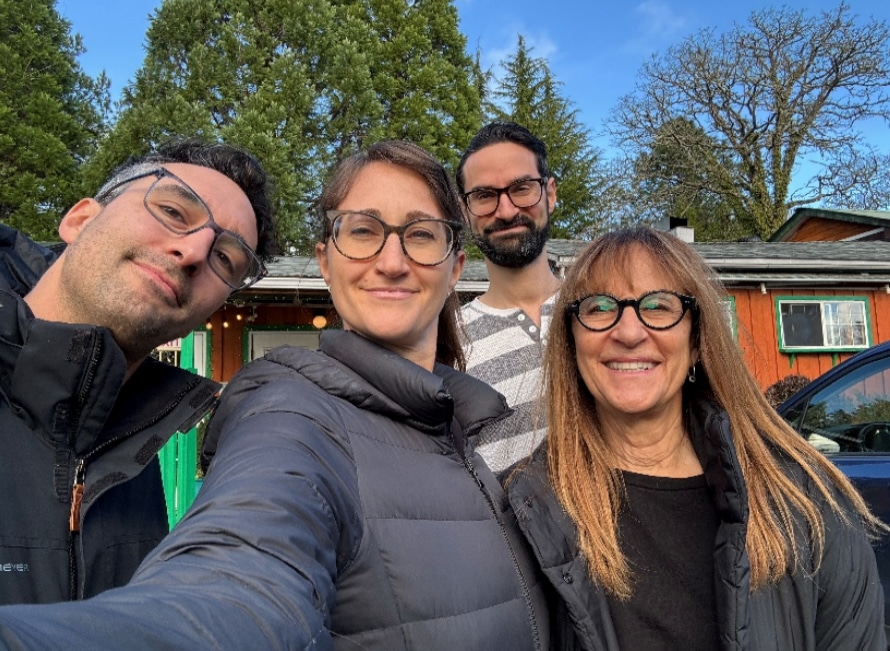
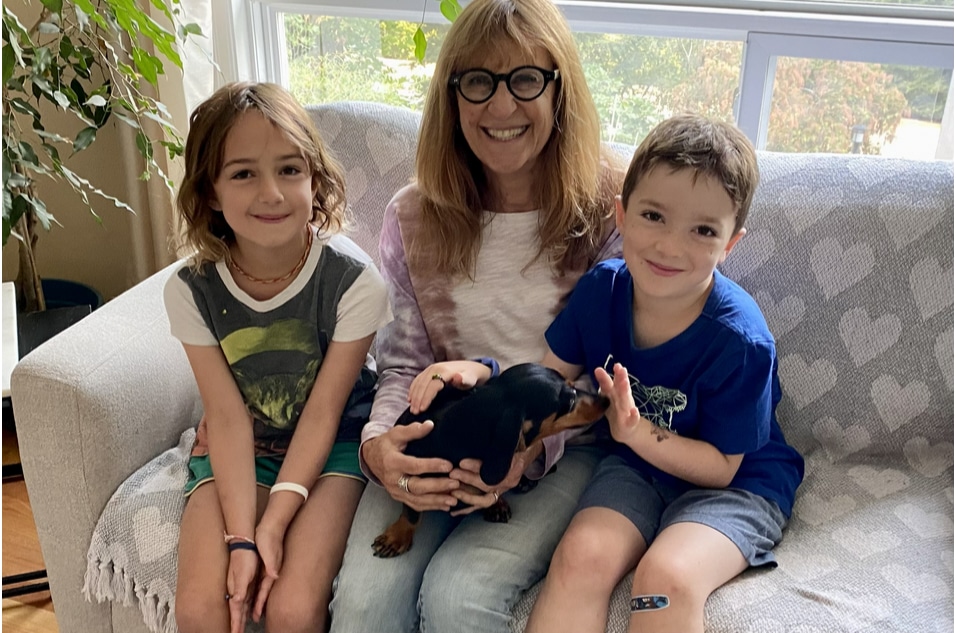
Sheila was an accomplished pianist and even learned to play the cello on a whim while being pregnant with Ariana. She loved the arts of all kinds – visual, music, dance, artifacts. She also loved attending the folk fest with her friends. She was an avid and adventurous traveller with trips to Burma, India, the Middle East, Morocco, Portugal, Spain, and more. She especially loved visiting NYC. But she was also not above binge watching a good television show or comedy special.
Sheila was an excellent cook and loved ‘breakfast cake’. She advocated for dessert first. Ever the consummate host with countless gatherings in her kitchen, she also maintained an extensive scotch collection for other people to enjoy. She would enjoy a taste of whatever everyone else was having.
She hosted parties for her kids for years, for her friends, for Jewish holidays and invited in hundreds of strangers over the years so that they could build their own communities, and she even reluctantly shared her recipes with her family & tons of friends/strangers so that they could go on to entertain & feed others.
While being on nine committees and boards in the 80s, Sheila first got sick with the illness that she would fight for the next 10 years and dealing with the after-effects for the rest of her life. She `pulled back’ to six committees and boards, but her health deteriorated. The doctors said it was Encephalitis and Chronic Fatigue Syndrome, but Ariana believes it was also Oppression and the Injustice of Women’s Pain!.
Sheila’s steady demeanor and joyful disposition never betrayed the health challenges she faced. Even after her pancreatic diagnosis in late 2025, whenever the terrible side-effects of the treatment permitted, Sheila was ready for an outing, lunch/dinner dates, and community meetings.
Sheila had iconic fashion sense. In the aftermath of her chemo treatment, you could see her wearing very stylish hats slaying like the queen that she was.
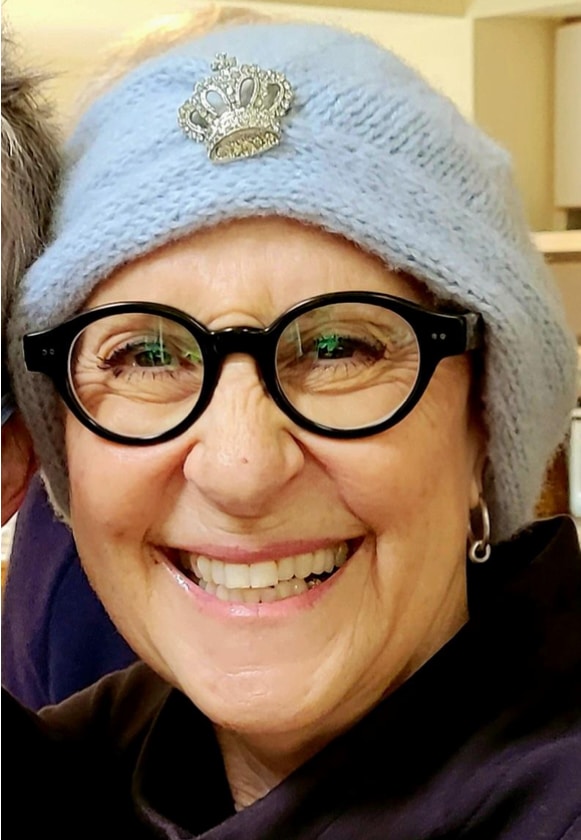
The flame that burned so bright has now gone into the great beyond. But her inspiration to keep fighting for a fair and just world lives on in her family, friends, and all whose lives she touched.
With much love, admiration, and gratitude to our Sheila.
Donations may be made to any cause that moves you. For your reference, here is a small sample of organizations Sheila recently supported:
- Sexual Violence: Salal Sexual Violence Support Centre (previously WAVAW), Sexual Assault Centre of Edmonton
- Human Trafficking: Action Coalition on Human Trafficking
- Environment: Peninsula Streams Society
- Peace: NIF
- Local Politics: North Saanich Strong
- Community: North Saanich Currents Community Impact Fund
- Reproductive Justice: Planned Parenthood
- Health: Saanich Peninsula Hospital and Healthcare Foundation
[1] The movement to improve access, especially for poor and rural women, and to destigmatize abortion had been going on since the late 1960s. By a conservative estimate, between 1926 and 1947, 4,000 to 6,000 women died as the result of illegal abortions in Canada. Under pressure from doctors, lawyers, and medical groups, the Canadian Criminal Code was amended in 1969 to permit abortion under certain limited circumstances. The bill allowed hospitals to set up “therapeutic abortion committees” of three doctors to approve abortions if the woman’s life or health is at risk. The new arrangement protected the doctors from prosecution, but not the women.