Snowberries: Natural Festive Ornaments & Food Sources for Native Birds
by Jillian Buriak
Now that most of the deciduous trees and bushes have lost their leaves, festive displays of native white snowberries (PEPKIYOS, Symphocarpus albus, also called waxberries)1 have become evident. Snowberry bushes are common in Douglas fir and Garry oak ecosystems around here, appearing in thickets along trails, open areas, ditches, and streambanks.
According to local bird specialist Geoffrey Newell, when times get lean in late winter, snowberries are a critical food of last resort for a number of local birds. Snowberries tide over many species of birds in late winter and early spring until food sources such as insects return. Newell suggests keeping an eye for large flocks of purple finches feeding on snowberries, as well as spotted towhees, evening grosbeaks, and fox sparrows, in the snowberry thickets. If anyone captures photos of birds eating snowberries, please share – we will post it here.
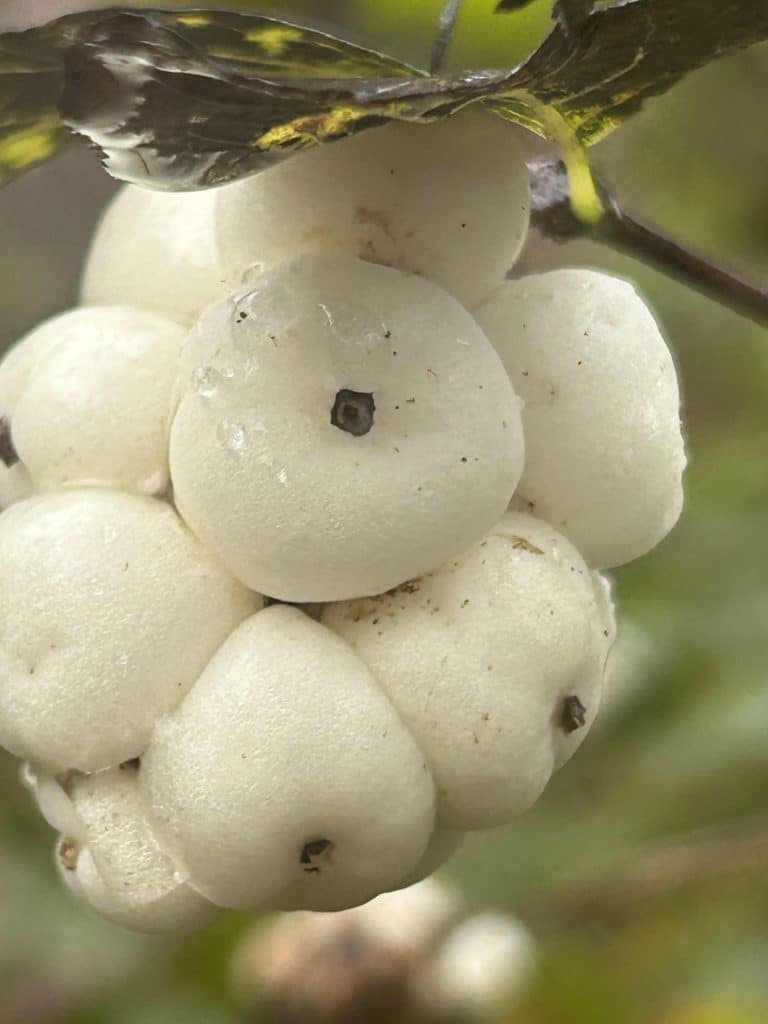
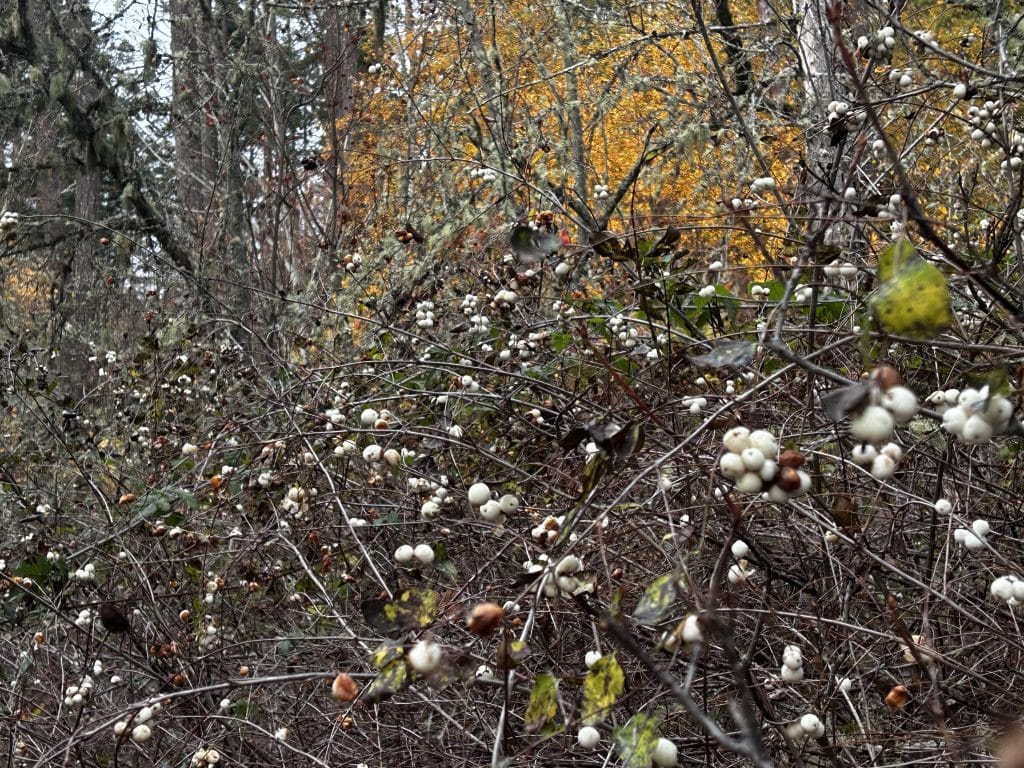
In addition to providing food for native bird populations over the winter, snowberries are one of our most versatile native bushes – they grow under a wide variety of conditions, from moist soil to dry, in shade and in part or even full sun. Through the spread of rhizomes, they also reinforce slopes to prevent erosion and are often intentionally grown on hillsides and riparian zones to stabilize soil and banks. In summer, they have delightful tiny white and pink bell-shaped flowers that are favourites of native bumblebees. Please note that snowberries cannot be consumed by humans as they are toxic, but they have been used by W̱SÁNEĆ peoples to rub directly on skin to treat burns and rashes according to Elder Elsie Claxton.2
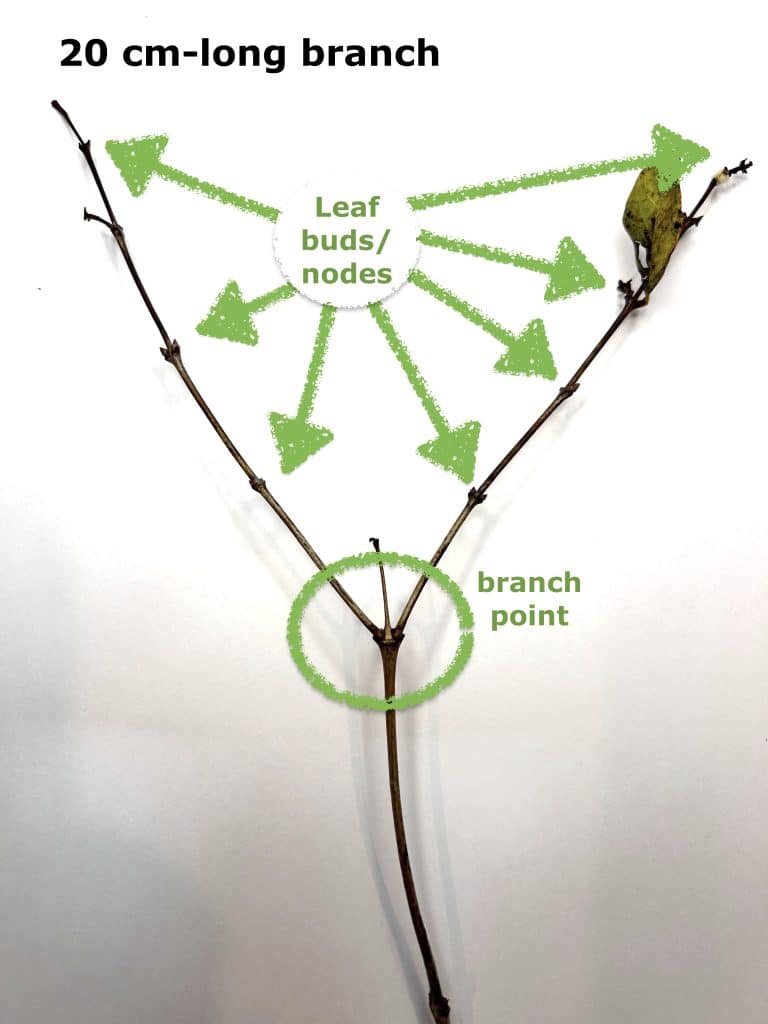
If you would like to grow your own snowberries, you can easily propagate them. Now that the bushes are dormant, it is an excellent time to try. One small branch from a snowberry bush will provide you with a dozen small twigs that can be propagated into individual plants. Please only cut one branch from an individual plant – this approach mimics browsing by native Columbia black-tailed deer and does not harm the bush.
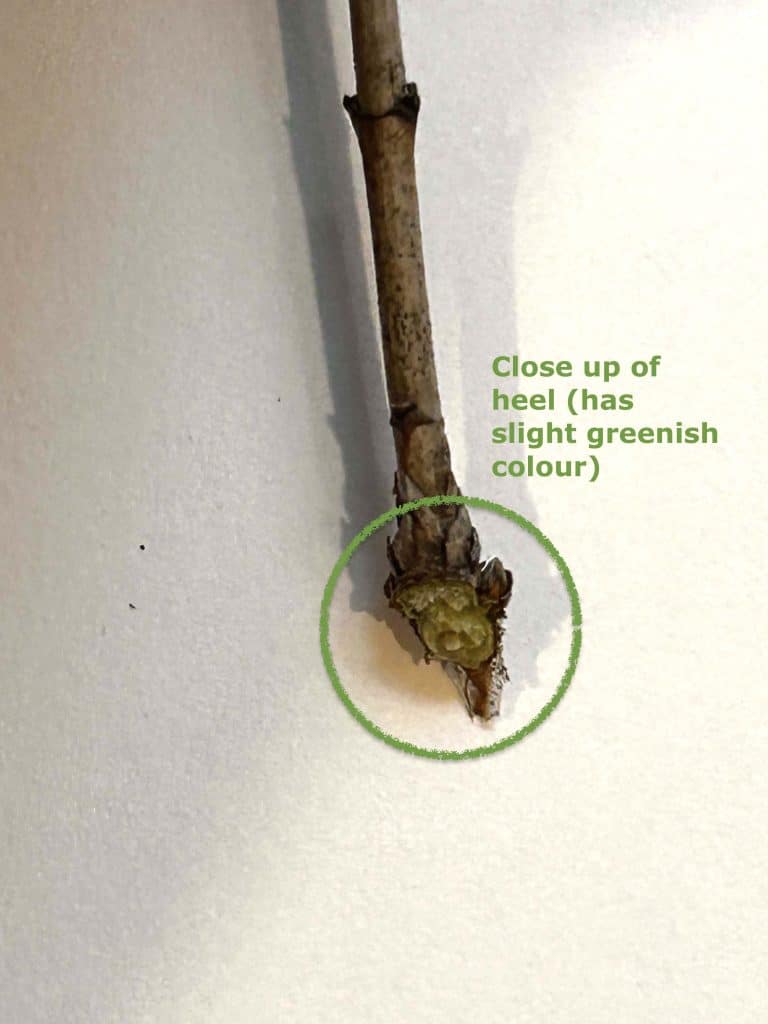
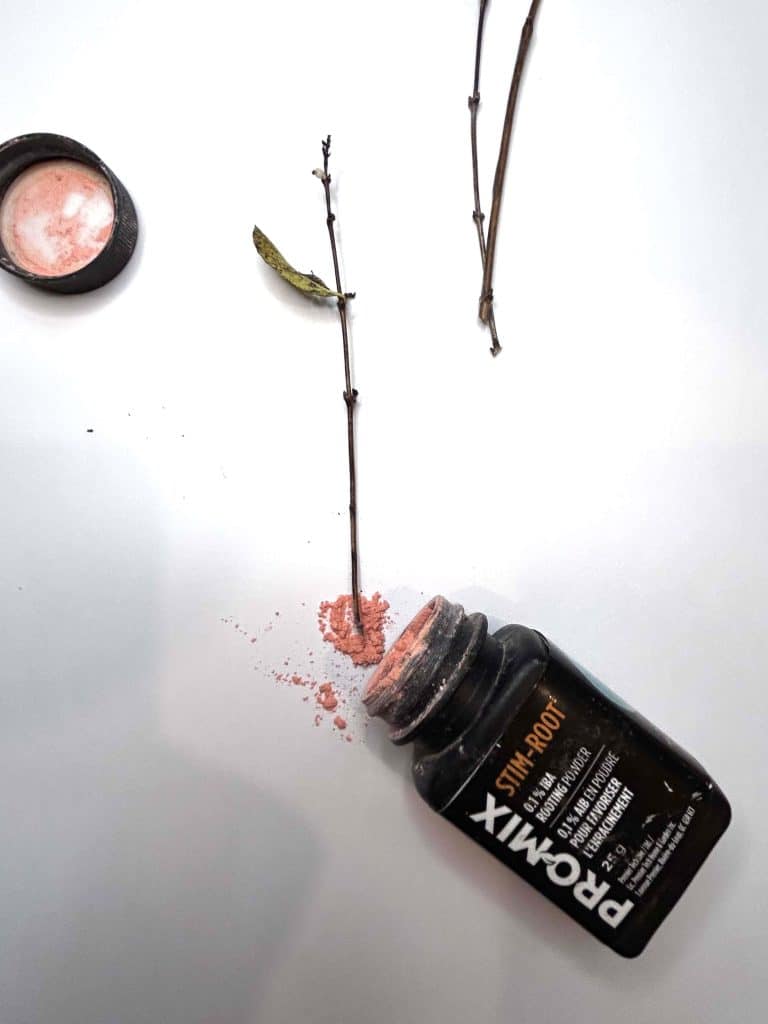
With clean sheers, cut one 25-cm branch that has numerous small twig-like branches – each one of these twigs will become one bush. Slowly tear the two twigs off the main branch manually so that, as in this example, you will have three sticks, each with many dormant leaf buds (also called nodes). The ends of the twigs are called heels and are a great surface from which roots will grow. The main stick can also be propagated by making a diagonal cut just below a leaf bud, which contains the necessary stem cells to produce roots. While not necessary, dipping the twigs or stick ends in a commercial rooting hormone may increase the chances of success. You can buy this rooting hormone at a garden store or nursery.
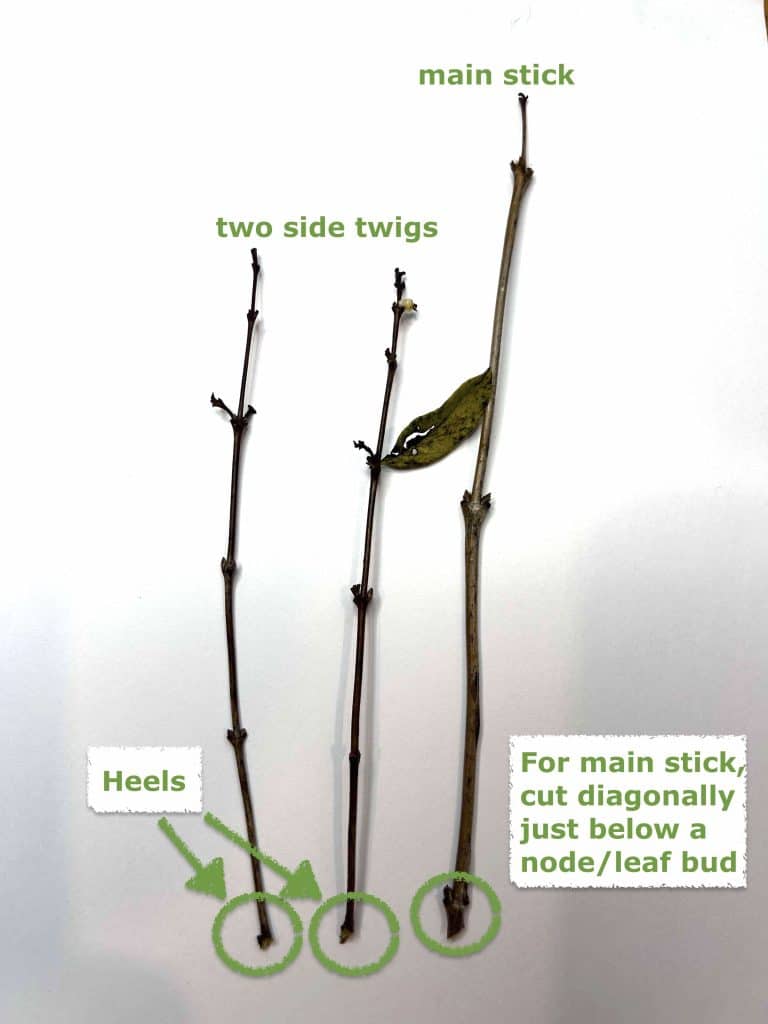
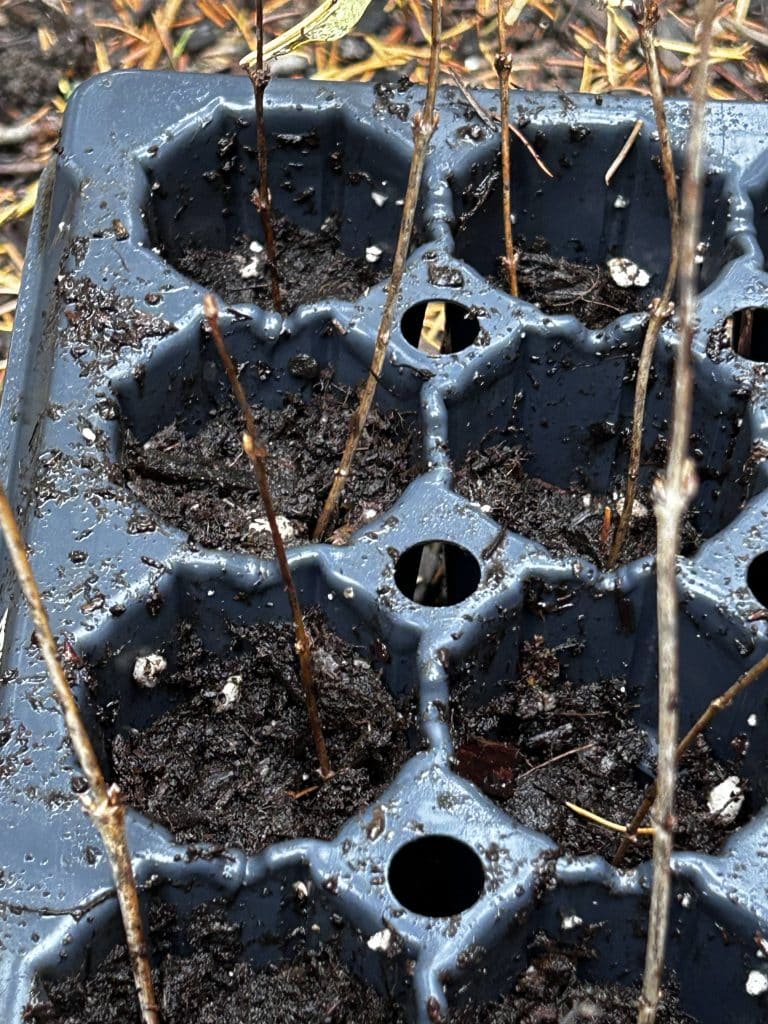
To plant the sticks, use a stick or your finger to make a hole that is about 2 cm deep. Once the stick is in the hole, the dirt should cover the first leaf bud above the heel or bottom cut. Water the soil and leave outside to do its thing – ensure that the pots do not sit in standing water, which could cause rot. You can also plant the sticks directly in the ground.
In early spring, you will see movement in the leaf buds as they leaf out. Let the snowberries develop roots and then move to larger pots in late spring or summer for planting in the ground in fall of 2026. If you have deer or rabbits, consider protecting them with a wire mesh until established. You can transplant them into the ground as bare roots, or in the dirt ball. Snowberries can also be purchased inexpensively from Satinflower Nurseries in Central Saanich on the Lochside Drive. Your local birds will thank you!
For more reading
- How to pronounce PEPKIYOS in SENĆOŦEN.
- Nancy J. Turner and Richard J. Hebda, Saanich Ethnobotany, Royal British Columbia Museum, 2012, page 110.
Garry Oak Ecosystems Recovery Team (GOERT): How to propagate snowberries
University of Washington: Cutting Propagation Methods for PNW Native Shrubs and Trees
Master Gardeners of BC: Info on propagating native plants