Chocolate Lilies of North Saanich: Beauty on the Smallest Scale
by Michael Henshaw
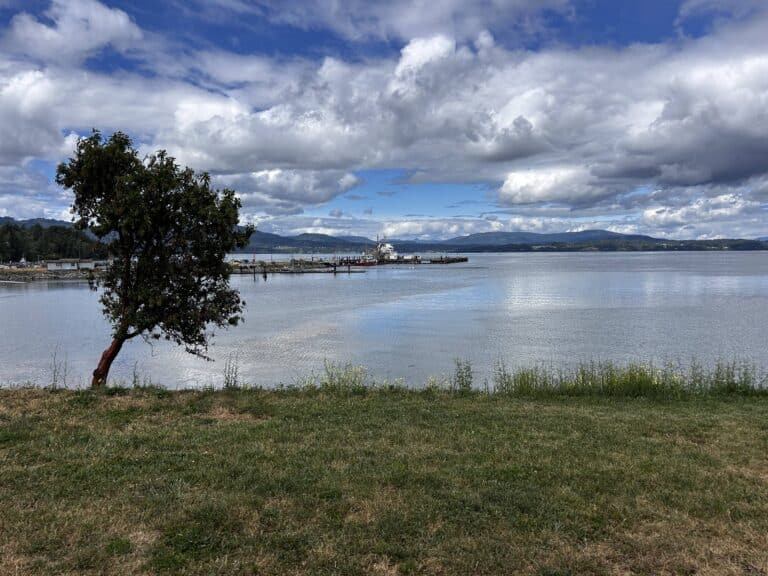
When we think of North Saanich, we tend to imagine the big scale features – tall Douglas firs, or the view out over the Saanich Inlet. The image in this article, on the other hand, offers a view of North Saanich on the much smaller scale of native pollen samples seen through a microscope.
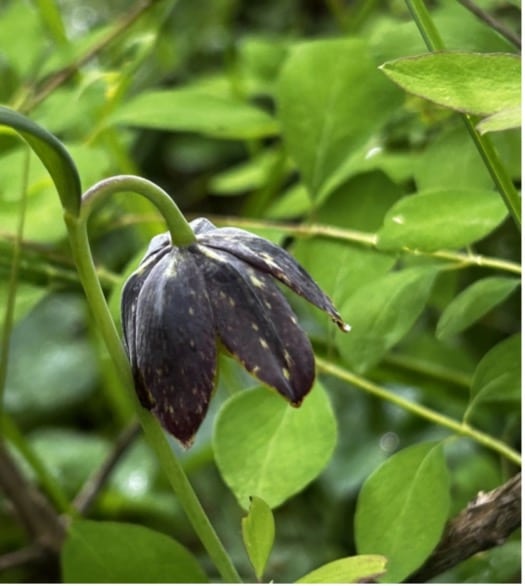
When the winter nights are long and rainy, my interest turns to one of my favourite parts of spring – pollen! Winter is when I finally analyze the many pollen samples I have collected during the warmer months, and those provided to me by researchers at UVic and Satinflower Nurseries. With winter and the holidays often comes chocolate, so the example I have used is the delicate chocolate lily (apologies in advance if you start craving chocolate – I don’t blame you).
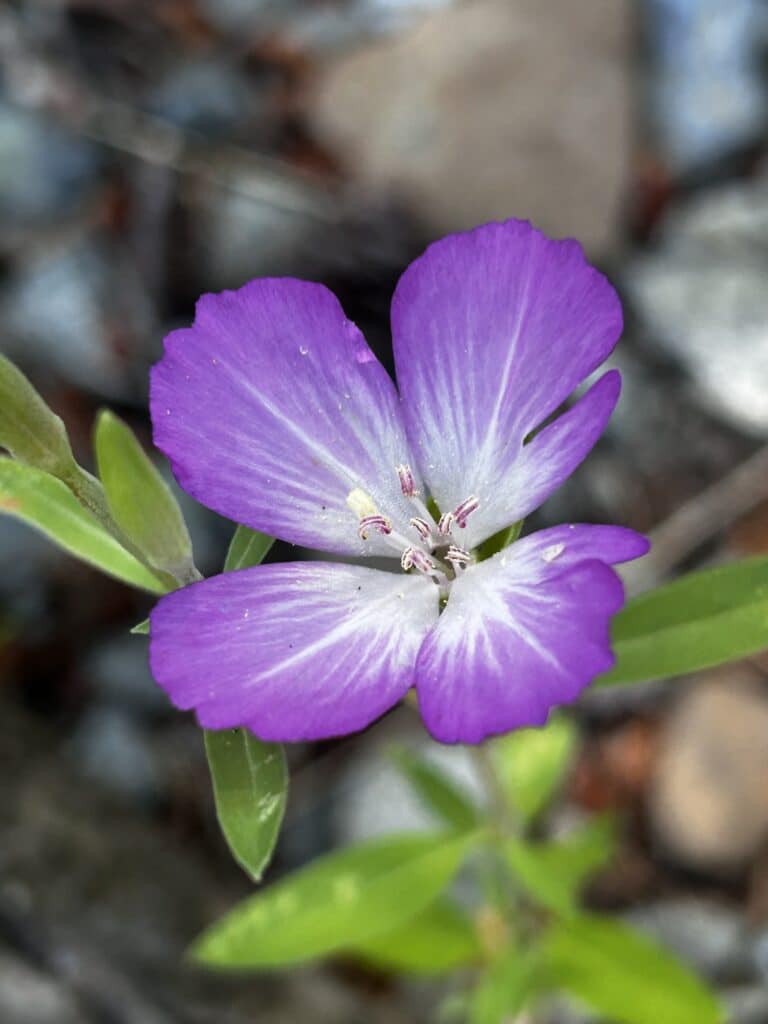
In relatively undisturbed Garry oak meadows, tiny chocolate lilies (Fritillaria affinis) emerge in spring in the lee of perennial grasses such as Roemer’s fescue and Columbia brome, with annual flowers like sea blush. If you take your time and look closely in the grasses, you might be lucky to observe the speckled brown petals of this unique flower with grass-like leaves that help the plant to blend in. Disturbance of the soil due to walking or pulling will kill them, which is why they have become rare and special in North Saanich. Chocolate lilies have yellow pollen-laden anthers near the centre of the flower, and being fortunate that they grow in our yard, I harvested a few grains of pollen from a chocolate lily by gently coaxing some pollen onto a microscope slide brought into contact with an anther.
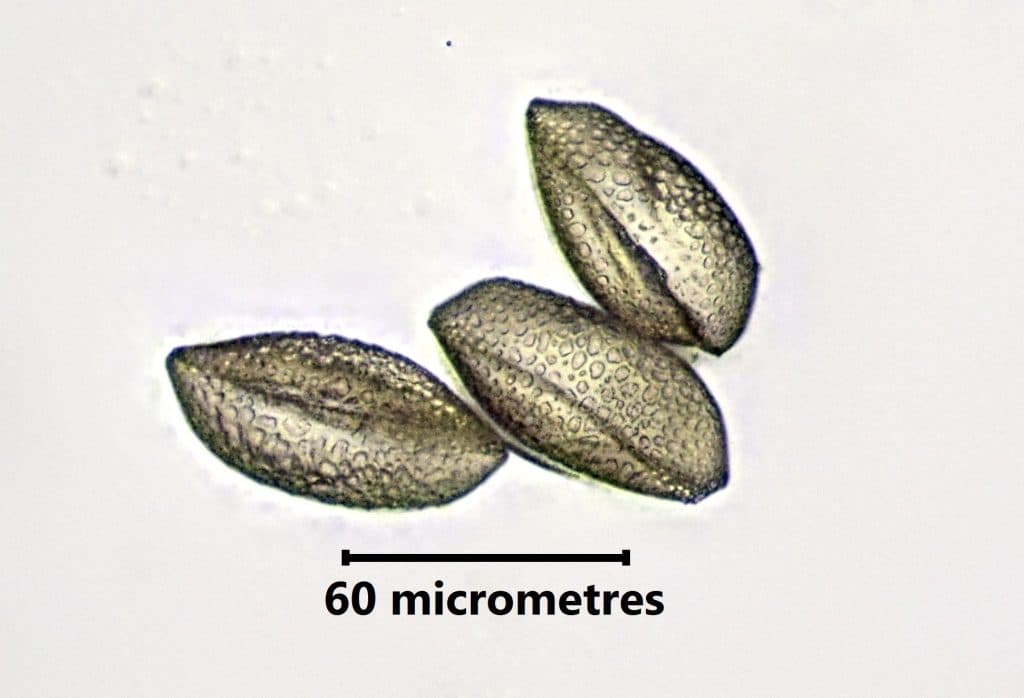
Technical details: compound microscope with a 40X infinity plan objective and oblique filter, final image formed by focus stacking of 14 images, contrast enhanced.
A compound microscope at a magnification of 400 times can resolve the intricate fine structure of the outer shell (exine) of the pollen grains. Each pollen grain is about 60 micrometres long, or about half the diameter of a human hair. Pollen of different categories of plants have distinctive shapes and micropatterns that can be used to help identify them.
Thanks to the resilience of the outer shell, pollen produced even millions of years ago can still be identified in fossilized sediments, providing knowledge of vegetation of that era. For instance, 21,000-year old pollen was found in glacial sediments at McKenzie Bight in Central Saanich. The Saanich peninsula was covered by ice during the last ice age, but this discovery shows that there were nearby areas on southern Vancouver Island that were ice-free during this time.1
- K. Miskelly, Vegetation and climate history of the Fraser Glaciation on southeastern Vancouver Island, British Columbia, Canada.