Don’t Get Ticked Off: Avoiding and Removing Unwanted Guests with Ease
by Michael Henshaw
Spring comes early and quickly to North Saanich compared to the rest of the country, and we wouldn’t have it any other way. The warmer weather also signals the arrival of tick season, which extends from March to early July.[1] Ticks can carry a number of bacterial diseases, including Lyme disease. While the risk of Lyme disease in BC is lower compared to other regions of Canada,[2] North Saanich has been designated by the BC Centre for Disease Control as an area of risk for Lyme disease in the province (link to map).[3] Climate change is leading to expansion of the range and prevalence of ticks and thus the risk is expected to rise.[4]
I had a close relative who suffered from Lyme disease for years, and I would not want friends, neighbours, or anyone, to go through what he did. Simple preventative measures are the best way to avoid tick bites.[5] Ticks are found in grassy or forested areas, hanging out on the leaves of shrubs, bushes, or in piles of leaves, waiting to ‘hitch a ride’ on a mammal that passes by, which could inadvertently be you or a pet. When out in the woods or grassy areas, wear light coloured clothing and closed toed shoes, tuck your long-sleeved shirt into your pants and your pants into your socks. Spray your clothing with bug spray with DEET or Icaridin, or wear permethrin-treated clothing (for example, Mark’s tick and mosquito-repellent clothing, available in Sidney). When you return indoors, do a visual scan of your body and have a shower to wash off unattached ticks.
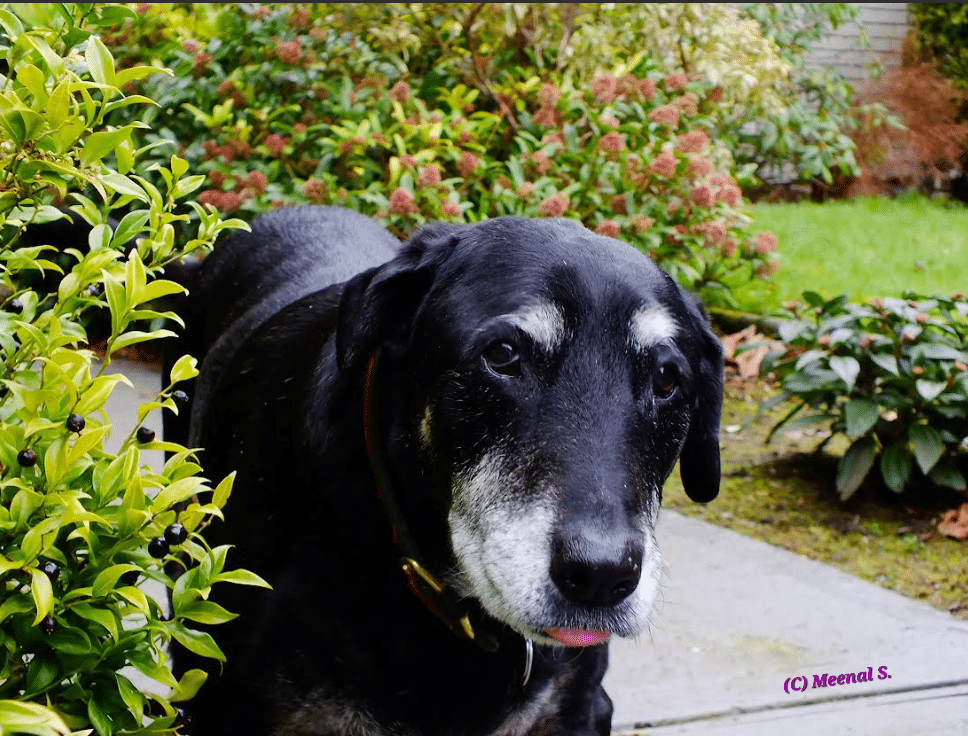
If your dog or cat has been outside, check for ticks while running your hands through their fur. Dogs, cats, and horses can also suffer from tick-borne diseases, including Lyme disease.
Do not panic if you find a tick on you or on a pet – removal within 24-36 hours of attachment minimizes the risk of transmission of Lyme disease.[6] Healthlink BC says to “See your health care provider to remove the tick if it has buried itself deep into your skin.” If the tick is not buried and you are able to remove the tick, use tweezers or a tick remover tool as shown here and here, being mindful to remove it by the head (as opposed to its body, which if squeezed, effectively empties its contents into its host). If you don’t have tweezers, make a tick remover with scissors and and old credit card as shown here. Take a photo of the tick and upload it to etick.ca for identification. Put the tick in a closed container labeled with the date and time and keep it in the freezer for 30 days while monitoring for signs of illness, including the so-called bulls eye rash, fever, headache, joint pain, and fatigue.[5] Your physician can also get a tick tested BC CDC Public Health Laboratory if the tick was attached to a human to see if it carries Lyme disease and other tick-borne diseases. Veterinarians can do the same for pets (more information from the BC SPCA here).
Locally in Vancouver Island, Lyme disease is transmitted by the Western black-legged tick, Ixodes pacificus, which can carry the bacterium Borrelia burgdorferi that causes the disease. While all age groups in Canada are affected, those over age 60 suffer from the highest number of cases of Lyme disease.[7] There are also other tick-borne diseases carried by local ticks (rocky mountain spotted fever,[8][9] for example). No one wants any tick-borne disease, and thus everyone agrees on this: you should do your best to avoid the risk of infection by being bitten by a tick. Awareness and simple preventative steps will help you and your family stay safe.
Outsmart those ticks:
-The most common “tick-lish” spots on the body are behind knees, elbows, and hairline.

Citizen science at the service of tick surveillance. Upload your tick photos for identification and mapping to etick.ca.
-Some people in North Saanich wear ankle ‘bracelets” of inside-out duct tape to trap ticks as they walk through the bush.
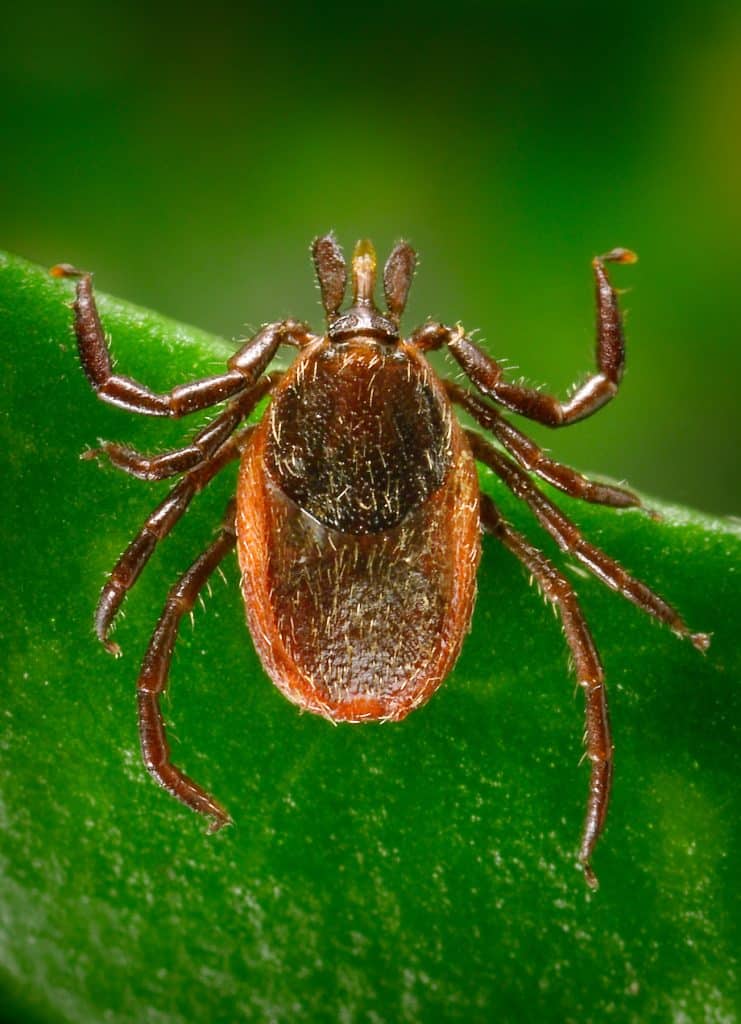
Ticks have 8 legs as they are arachnids (class Arachnida). Image of Ixodes pacificus, the western black-legged tick courtesy of Drs. Amanda Loftis, William Nicholson, Will Reeves, Chris Paddock and James Gathany of the Centre for Disease Control (CDC, USA). Creative Commons license (link from image).
[1] From the BC CDC: https://www.bccdc.ca/resource-gallery/Documents/Statistics%20and%20Research/Statistics%20and%20Reports/Epid/Vector-bourne/Ticks/Tick_By_Month.pdf
[2] From the BC CDC: https://www.bccdc.ca/resource-gallery/Documents/Lyme%20Disease%20and%20Tick%20Surveillance%20in%20British%20Columbia%20-%202024%20Update%20%28Up-to-Date%20Version%29.pdf
[3] From Doctors of BC: https://www.doctorsofbc.ca/health-promotion/2022/tick-talk-knowing-bcs-high-risk-areas-can-keep-you-safe
[4] From UBC Faculty of Medicine: https://www.med.ubc.ca/news/climate-change-is-increasing-the-risk-of-lyme-disease-in-canada-take-steps-to-protect-yourself/
[5] From Government of Canada’s Public Health Services: https://www.canada.ca/en/public-health/services/diseases/ticks-tick-borne-diseases/prevent-tick-bites.html
[6] From the BC Pharmacy Association: https://www.bcpharmacy.ca/news/lyme-disease-targeting-more-just-bulls-eye
[7] Open access article that uses data from BC and other provinces: Murison, K.; Wilson, C. H.; Clow, K. M.; Gasmi, S.; Hatchette, T. F.; Bourgeois, A.-C.; Evans, G. A.; Koffi, J. K. Epidemiology and clinical manifestations of reported Lyme disease cases: Data from the Canadian Lyme disease enhanced surveillance system, PLoS ONE 2023, 18(12): e0295909. https://journals.plos.org/plosone/article?id=10.1371/journal.pone.0295909
[8] From the BC CDC: https://www.bccdc.ca/health-info/diseases-conditions/tick-borne-diseases/rocky-mountain-spotted-fever
[9] From HealthLink BC: https://www.healthlinkbc.ca/healthlinkbc-files/tick-bites-and-disease